Event 1
The Holocaust
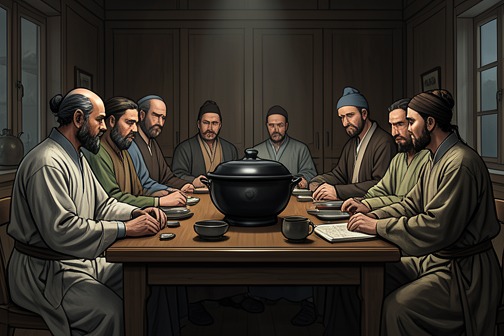
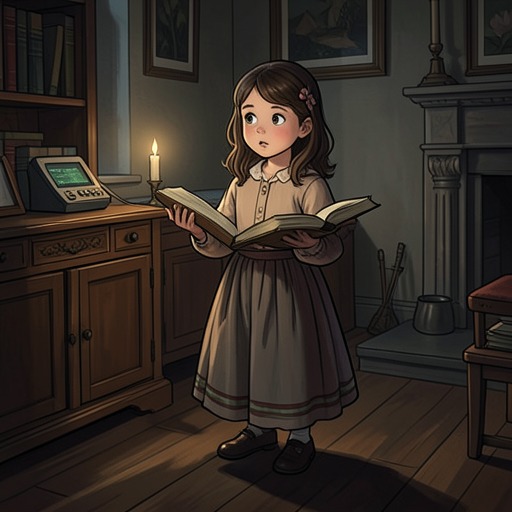
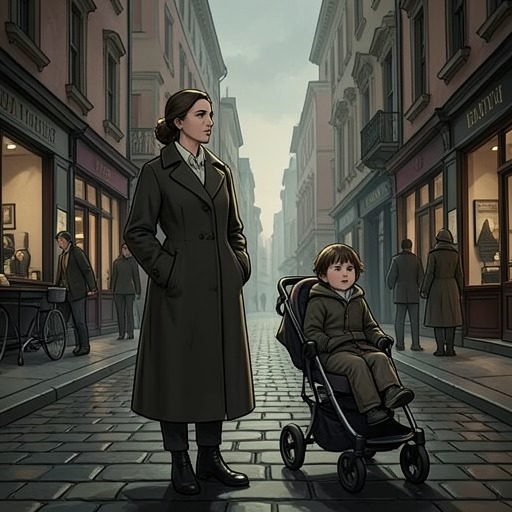
[The Holocaust](entity:event-recall-event-the-holocaust-ed936793c45b) stands in [Devorah](entity:character-recall-character-devorah-702ea5cd08f5)’s account as a mass loss that continues to shape religious belief, family memory, and the obligations imposed on the living. Its effects appear not only in the deaths of [Bubby](entity:character-recall-character-bubby-f3657468b4ed)’s relatives but also in the [Satmar](entity:organization-recall-organization-satmar-0936ed65658d) community’s postwar return to tradition, its emphasis on rebuilding through children, and the conflicting explanations of suffering that Devorah hears from her elders and teachers.
## Historical Background and Communal Aftermath
In the author’s account of Satmar’s origins, the sect takes its name from [Satu Mare](entity:location-recall-location-de6585995f64), a city on the border of [Hungary](entity:location-recall-location-79524dcb2a7f) and Romania. During [World War II](entity:time-recall-time-c7bd852e004a), Hungarian Jewish lawyer and journalist Rudolf Kasztner rescued the rabbi from that city from certain death. The rabbi later emigrated to America and gathered a following among survivors, naming the Hasidic sect after his hometown. Other rabbis likewise used the names of their former towns, preserving the memory of communities destroyed in the Holocaust.
The postwar community’s return to inherited practice was deliberate. Hasidic Jews in America adopted traditional dress and spoke Yiddish, seeking to restore a heritage that had nearly disappeared. Many opposed the creation of the State of [Israel](entity:location-recall-location-e1a1566e26c9), believing that the genocide had come as punishment for assimilation and Zionism. Reproduction acquired particular weight: having children was understood as a way to replace some of those who had perished and to rebuild the community. The author describes the continued growth of Hasidic communities as a form of revenge against Hitler, turning survival and continuity into a collective answer to attempted destruction.
## Bubby’s Loss and the Family Record
The public story of survival is not the only story carried within Devorah’s family. At a family [Passover](entity:time-recall-time-passover-8277f8343ec1) gathering, [Zeidy](entity:character-recall-character-zeidy-5af2eaddb772) recounts scarcity during the war, including a time when there was no flour for matzo and the family ate small portions of potato instead. Bubby has heard the account many times; her quiet, weary response makes visible the imbalance between the story repeatedly told and the one rarely voiced.
Bubby lost her relatives in the Holocaust. Her family members were murdered at [Auschwitz](entity:location-recall-location-0c5cf169f4e7) while she worked in the factories at [Bergen-Belsen](entity:location-recall-location-aac3b2d50dde). By the time liberation came, she was close to death from typhus. She seldom speaks about this history, but she lights a memorial candle for each of the dead, including baby Mindel and fourteen-year-old Chaim. The candles give private form to a grief that family conversation often leaves unspoken: the names and ages make the losses specific, while Bubby’s silence shows how little of her experience reaches the next generation as a spoken account.
Zeidy’s own survival takes on a different emphasis. Devorah understands that he survived the war and sought to bring more Jewish children into the world, partly to replace those who had been lost. In the family’s religious language, this becomes both an act of continuity and a response to catastrophe. Yet the costs of that history are not confined to the past. Devorah notices the suffering within her family and wonders how survival can coexist with further misfortune, a question that unsettles the reassuring image of postwar rebuilding.
## Competing Explanations of Persecution
Devorah is taught that God sent Hitler to punish Jews who had embraced enlightenment and assimilation. In this explanation, the victims’ perceived departure from religious tradition becomes the cause of catastrophe, and the living are told that they now atone for earlier generations’ sins. The first great Satmar Rebbe offers a related promise: if Jews become exemplary in religious observance, a Holocaust will not happen again because God will be pleased with them. Small visible changes, such as thicker stockings or longer skirts, are presented as part of that effort. Devorah questions whether such adjustments could truly determine God’s favor or prevent another catastrophe.
Bubby does not share the confidence that stricter observance can secure safety. She believes another Holocaust may happen, places Jewish persecution within a long history that includes pogroms, Crusades, and the Inquisition, and rejects the idea that people control when disaster comes. She also warns Devorah not to trust non-Jews, even when they appear kind. Her outlook gives persecution a relentless, recurring quality; Zeidy, by contrast, trusts the Satmar Rebbe’s capacity to protect the community and places hope in the rabbi’s rescue from the camps. Their disagreement shows how the same history can sustain both a search for religious safeguards and a fear that no safeguard is enough.
## Devorah’s Inherited Fear and Doubt
These accounts shape Devorah’s understanding of herself before she can assess them from a distance. She hears that suffering is measured out by God and that failing to repent before the final call of the ram’s horn on [Yom Kippur](entity:time-recall-time-yom-kippur-449c2cb62e4f) brings divine judgment. The teaching makes pain appear deserved: the greater the suffering, the greater the presumed wrongdoing. But Devorah sees that Bubby and Zeidy are devout and have nevertheless endured profound loss. Their lives make the doctrine difficult to reconcile with experience.
The Holocaust also enters Devorah’s private fears. At night she wonders whether God loves her and whether another Hitler could come to kill her. She connects this fear to feeling rejected by relatives because of her parents and asks whether her mother, who has left the community, belongs among those she has been taught to distrust. In a dream, Devorah imagines a mass escape and her mother arriving to rescue her. The dream does not resolve the family’s history or religious questions, but it reveals how the Holocaust has become an imagined threat in the child’s present—and how her mother represents safety within that fear.
The event’s narrative significance lies in this uneasy inheritance. The Holocaust is not presented only as a completed historical catastrophe: it is invoked to explain communal identity, religious discipline, childbearing, distrust, and the possibility of future danger. Against Zeidy’s faith in religious protection and Bubby’s expectation of recurrence, Devorah’s questions expose what neither account can settle. Survival gives the community a reason to rebuild, but it does not quiet grief or make the cause of suffering clear.
Event 2
Rudolf Kasztner rescues the Satmar Rebbe

[Rudolf Kasztner rescues the Satmar Rebbe](entity:event-recall-event-rudolf-kasztner-d98ec621250d) is presented as a pivotal rescue in the origins of the [Satmar](entity:organization-recall-organization-satmar-0936ed65658d) Hasidic sect: Rudolf Kasztner saved the rabbi of [Satu Mare](entity:location-recall-location-de6585995f64) during [World War II](entity:time-recall-time-c7bd852e004a), and the rabbi’s later community in America carried the name of the town he had left behind.
## Background and Rescue
Satu Mare, known in Yiddish as Satmar, lies on the border of [Hungary](entity:location-recall-location-79524dcb2a7f) and Romania. During World War II, Hungarian Jewish lawyer and journalist Rudolf Kasztner undertook a mission to rescue prominent Jews from certain death. Among those he saved was the rabbi from Satu Mare.
## From Rescue to Community
The rabbi later emigrated to America and attracted a large following among other survivors. Together they formed a Hasidic sect named after his hometown. The account thus connects Kasztner’s intervention not only to an individual’s survival but also to the formation of a community in exile.
## Memory and Significance
The name Satmar preserved a link to the rabbi’s place of origin. Other surviving rabbis likewise named their sects after the towns they had come from, making communal names a way to remember the shtetls and communities destroyed in the Holocaust. The rescue therefore stands at the beginning of a story in which survival becomes both collective rebuilding and an act of remembrance.
Event 3
Establishment of the Satmar Hasidic sect in the United States
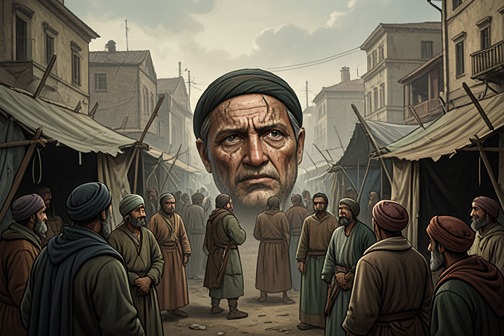
The establishment of the [Satmar](entity:organization-recall-organization-satmar-0936ed65658d) Hasidic sect in the United States turned the name of a European hometown into both a religious identity and a memorial. In the author’s account, a rabbi rescued from certain death during [World War II](entity:time-recall-time-c7bd852e004a) built a following among survivors in America; the community that formed around him carried the name of [Satu Mare](entity:location-recall-location-de6585995f64), the city known in Yiddish as Satmar. Its growth belonged to a wider postwar effort to restore a heritage and population devastated by the Holocaust.
## Rescue, Migration, and Naming
Satu Mare lies on the border of [Hungary](entity:location-recall-location-79524dcb2a7f) and Romania, and its Hungarian name means Saint Mary. The author traces the sect’s name to the rabbi from that city, whose life was saved by Hungarian Jewish lawyer and journalist Rudolf Kasztner while Kasztner was trying to rescue prominent Jews during World War II. The rabbi later emigrated to America, gathered a substantial following of fellow survivors, and named the sect after his hometown. The account thus links the community’s American beginnings to rescue, migration, and a place-name carried across the Atlantic.
The naming was not unique to this rabbi. Other surviving rabbis also named their sects after the towns they had left, seeking to preserve the memory of shtetls and communities destroyed in the Holocaust. A name that might otherwise have marked geographic origin became a form of continuity: the lost places remained present in the identities of communities rebuilt elsewhere.
## Postwar Revival and Continuity
The author describes Hasidic Jews in America as returning deliberately to a heritage that had nearly disappeared. Traditional dress and the use of Yiddish marked that return to ancestral practice. Many also opposed the creation of [Israel](entity:location-recall-location-e1a1566e26c9), interpreting the genocide of the Jews as punishment for assimilation and Zionism. This anti-Zionist belief is presented as one strand of the postwar religious outlook, alongside the insistence on cultural continuity.
Population growth was especially important in the account. After the mass deaths of the Holocaust, Hasidic communities focused on having children, both to replace those who had been killed and to expand their numbers. The author presents this demographic recovery as a continuing project: Hasidic communities keep growing, and that growth is understood within the community as a form of revenge against Hitler. The sect’s establishment therefore represents more than the survival of one rabbi’s following; it belongs to a collective attempt to answer destruction with renewed communal life.
## Memory and Later Generations
The memoir sets this historical account beside family memory. The narrator’s grandmother, [Bubby](entity:character-recall-character-bubby-f3657468b4ed), lost her relatives in the war; she lights a yahrzeit candle for each of them but rarely speaks about her loss. The story does not identify Bubby as part of the sect’s founding, but her mourning gives intimate scale to the history of devastation against which postwar rebuilding took place. The contrast is telling: public communal continuity is asserted through names, language, dress, and new generations, while an individual survivor’s grief may remain largely unspoken.
Later, the narrator worries that her son will enter cheder at age three and spend his childhood studying [Torah](entity:object-recall-object-torah-61a404afb5a0) from morning until afternoon, with his life increasingly shaped by male religious influences. She fears that this path will limit him even as she seeks room to broaden her own horizons. That conflict does not undo the historical meaning of rebuilding after catastrophe; it shows how the project of communal continuity is experienced by a later generation as both inheritance and constraint. The founding story’s emphasis on survival and growth thus sits beside the narrator’s struggle over what kind of future that continuity should make possible.
Event 4
Establishment of the State of Israel
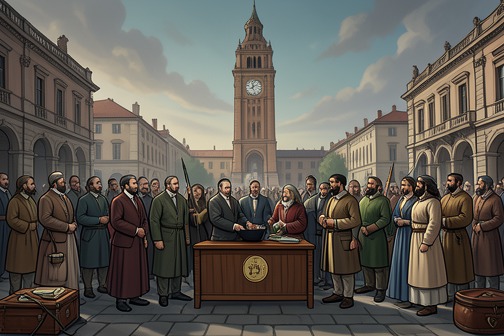
The establishment of the State of [Israel](entity:location-recall-location-e1a1566e26c9) is presented through the opposition it provokes in the [Satmar Hasidic community](entity:organization-recall-organization-satmar-hasidic-c-f4ec672ab052), rather than through an account of the founding itself. For the narrator’s family, the new state is not an uncomplicated answer to Jewish catastrophe: [Satmar](entity:organization-recall-organization-satmar-0936ed65658d) teaching casts Zionism as a rejection of religious waiting for the Messiah, while family memories connect the debate to the lives lost in the Holocaust and the survival of religious communities afterward.
## Postwar Context
The memoir’s author’s note places the Satmar movement in the aftermath of the Holocaust. Rudolf Kasztner rescued the rabbi from [Satu Mare](entity:location-recall-location-de6585995f64), who later emigrated to America and gathered survivors into a Hasidic sect named for his hometown. The note describes a wider return among American Hasidic Jews to Yiddish and traditional dress, alongside opposition to the creation of Israel among many who believed that assimilation and Zionism had brought divine punishment. Rebuilding the community through reproduction was another response to the mass loss of life.
This context makes the state’s establishment more than a political question in the narrator’s surroundings. It becomes part of a struggle over how Jewish survival should be understood: as recovery through a sovereign homeland, or as the preservation of religious life while awaiting redemption. The memoir presents that conflict through the beliefs and recollections of the people around [Devorah](entity:character-recall-character-devorah-702ea5cd08f5), not as a neutral history of Israel’s founding.
## Religious Opposition and Public Protest
Each May, [Zeidy](entity:character-recall-character-zeidy-5af2eaddb772) joins men traveling to [Manhattan](entity:location-recall-location-5e470c74b89c) for the Satmar Hasidic community’s anti-Zionist parade on Israeli Independence Day. The demonstrations bring members from different communities together to oppose the state. In the teaching Devorah recounts, the Satmar Rebbe regarded Zionism as an unprecedented rebellion: redemption from exile, he insisted, was not something Jews should bring about through political action or force, but something for which faithful Jews should wait for the Messiah.
The parade’s signs can appear contradictory to an outside observer: visibly Jewish demonstrators publicly opposing a Jewish state. Devorah, however, says the message makes sense within the beliefs she has absorbed. Her response shows how thoroughly the community’s account of Israel has shaped her understanding, even before she begins to question the world that formed it.
## Doctrine, Memory, and the Holocaust
The Satmar Rebbe’s manifesto, [Vayoel Moshe](entity:object-recall-object-vayoel-moshe-8c1c6ed2fab9), is kept in every Satmar home, according to Devorah. As she describes it, the book traces Zionism to the early twentieth century and presents the movement’s pursuit of a Jewish homeland as a religious transgression. The Rebbe’s interpretation, as relayed in the memoir, holds that Zionists gained sufficient political and social power only after the Holocaust. Zeidy objects to using the catastrophe to win sympathy for Zionism, treating that appeal as an affront to those who died.
[Bubby](entity:character-recall-character-bubby-f3657468b4ed)’s account adds a family memory to this ideological argument. She tells Devorah that Zionists turned away ships carrying Jews fleeing the Nazis and that children were separated from religious families so they could be shaped into a different kind of Jew. These are Bubby’s claims as the memoir reports them; the passage shows how she understands the history, not an independent verification of each allegation. Her bitterness makes the argument intimate: the founding of Israel is filtered through stories about refuge denied, children separated, and the religious communities that survived.
## The Event’s Place in the Narrative
The establishment itself remains offstage. The memoir instead traces its continuing presence in a May parade, a household religious text, and arguments repeated across generations. This focus shifts attention from the mechanics of statehood to the meanings assigned to it within Devorah’s family and community.
The contrast between public demonstration and inherited memory is central to that portrayal. For the Satmar community as Devorah encounters it, opposing Israel expresses a religious position about exile and redemption; for Bubby and Zeidy, it is also inseparable from their accounts of the Holocaust. Devorah’s early acceptance of the protest’s logic shows how communal teaching can make a contested political stance feel self-evident, while the memoir’s presentation of competing memories leaves the historical and moral dispute visible.
Event 5
Revelation at Mount Sinai and the Jews’ acceptance of the Torah

[Revelation at Mount Sinai and the Jews’ acceptance of the Torah](entity:event-recall-event-1076eac46f78) is retold in [Devorah](entity:character-recall-character-devorah-702ea5cd08f5)’s family as both a sacred origin story and a binding personal obligation. [Zeidy](entity:character-recall-character-zeidy-5af2eaddb772) teaches that every Jewish soul was present when the [Torah](entity:object-recall-object-torah-61a404afb5a0) was given and accepted responsibility for its laws; Devorah quietly wonders whether she ever consented, and whether an ancient covenant can justify rules imposed by a later community.
## [Shavuos](entity:time-recall-time-shavuos-4199902f6808) and the family’s retelling
The account takes shape during Shavuos, when Zeidy cuts flowers for the house and the family observes the holiday with separate dairy and meat meals. Cheesecake and cheese-filled kreplach come first; after a half-hour wait, the family eats smoked turkey with red cocktail sauce, chicken cooked with caramelized onions, and chopped liver. The separation of milk and meat is presented not simply as a dietary custom but as a reminder of the obligations the Jews accepted at Sinai, including laws that required sacrifice.
Zeidy explains the sequence of acceptance through the declaration “We will do and we will hear.” In his telling, the Jews committed themselves before hearing the full terms, an act of faith whose significance remains a source of pride. The holiday meal thus turns a foundational religious account into a repeated domestic lesson: the family’s observance is made to carry the memory of a decision made at Sinai.
## A covenant extended to every soul
After the meal, when the family is full, Zeidy invokes the Midrash that every Jewish soul was present when the Torah was handed down. The claim includes Devorah even though she has no memory of the event: forgetfulness does not release a person from a commitment made by the soul. Zeidy consequently treats rejection of any one of the laws as hypocrisy, because each Jew, in his account, was present when the responsibility was accepted. No Jewish soul is exempt.
Devorah’s inward response unsettles the certainty of this teaching without denying what it means to Zeidy. She wonders how old her soul would have to be to have stood at Sinai and whether it agreed because it wanted to fit in. The possibility connects the grand collective claim to her own disposition: fear of thinking differently aloud makes supposed consent feel less like a freely remembered choice than an obligation she has inherited.
## Sinai and the later community’s rules
Devorah distinguishes the covenant with God from Zeidy’s much later pledge of allegiance to the [Satmar](entity:organization-recall-organization-satmar-0936ed65658d) Rebbe. Zeidy committed himself to the plan for a community in [Williamsburg](entity:location-recall-location-a204f8f8ef73) before he knew what it would entail, thereby binding his family and future generations to its way of life. Devorah recalls that the family’s life in [Europe](entity:location-recall-location-ed02f8422cdd) had not been as extreme: her ancestors were educated, lived among Persian carpets and wooden floors, and traveled freely across the Continent. The contrast makes the community’s restrictions a historical choice, not simply an unchanged extension of the Sinai covenant.
She attributes rules such as prohibitions on reading English books and wearing red to the rebbe’s decision to isolate the community and prevent its members from blending into the outside world. Her question is therefore not only whether the Torah was accepted, but whether that acceptance can obligate her to follow every later rule devised by communal authority. She also recognizes the fear and loneliness of survivors like Zeidy, for whom the community offered a place that felt safe; her doubt emerges alongside, not in ignorance of, the conditions that shaped his loyalty.
## The covenant’s presence in Devorah’s life
The Sinai teaching gains a personal edge as Devorah approaches marriage and is required to confront parts of life from which her upbringing had sheltered her. She describes the discovery of her mekor as a dividing line between being a girl and being a girl expected to understand her body as designed for sex. The transition conflicts with the chaste life to which she had grown accustomed, and she says her body rebels against the change. In her account, the new expectations help sow the first seeds of the destruction of her marriage.
Her later preparation for the mikvah makes religious obligation concrete in a different way: the ritual takes place in a private, monitored setting, and she follows its prescribed steps while trying to preserve her composure. The contrast clarifies the distance between Zeidy’s account of a collective acceptance at Sinai and Devorah’s experience of obligations encountered through rules and procedures she did not remember choosing. The revelation remains the community’s foundational story, but her recollection also asks who has the authority to extend that story into the lives of later generations.
Event 6
Deaths of Roize and her unborn child
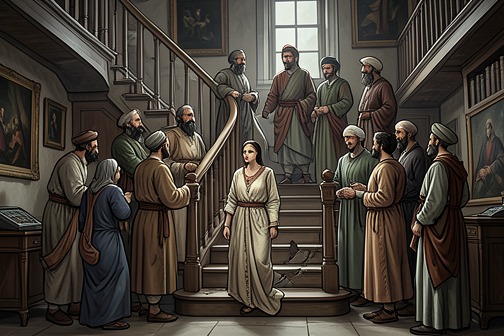
The deaths of Roize and her unborn child are a remembered tragedy that turns a staircase into a witness to the cost of dynastic ambition. As [Devorah](entity:character-recall-character-devorah-702ea5cd08f5) leaves a religious celebration in the early morning, the account she carries of Roize’s death connects a past succession struggle to the rivalries of the present, and deepens her sense of alienation from a community that calls itself holy.
## The remembered account
According to the story Devorah has heard, Roize, the first rabbi’s only daughter, was pushed to her death on the stairs. She was pregnant, and her unborn child—who was expected to inherit the coveted [Satmar](entity:organization-recall-organization-satmar-0936ed65658d) dynasty—also died, only weeks before the expected birth. The account places a family tragedy within a struggle over succession: others already had their eyes on the position the child might have inherited. The passage does not identify who pushed Roize or establish the circumstances beyond the report that she was pushed.
## The staircase and Devorah’s memory
Devorah encounters this history as she walks down the very stairs associated with Roize’s death. She has left after the third dance, at 3:30 a.m., although four dances remain before the celebration ends at dawn. Tired of competing with other women for a view she does not truly want, she makes an excuse about meeting her grandmother outside; her friends cannot hear her in the noise. Now she must find her way home alone in the dark, and the stairs make the inherited account immediate rather than distant.
Devorah imagines Roize standing there, pregnant, and feels that Roize’s pain lives within her. She says she cannot forget, unlike others. The memory therefore marks a difference between Devorah and the surrounding community: where public celebration and communal devotion seem to invite shared feeling, she remains fixed on an unresolved loss and the violence that, according to the story, accompanied it.
## Succession and communal disillusionment
The remembered death informs Devorah’s judgment of the contemporary rabbinical succession struggle. By her account, the Satmar community was still young when Roize and her unborn child died; now the current rabbi’s sons quarrel over what she regards as a merely symbolic throne. The contrast makes the earlier tragedy feel less like a closed episode than a precedent: the struggle for rabbinical power has changed in scale, but it still troubles the ideal of brotherly love that Devorah believes God commanded Jews to show one another.
Devorah sets this spectacle against the humility [Zeidy](entity:character-recall-character-zeidy-5af2eaddb772) associates with rabbis in [Europe](entity:location-recall-location-ed02f8422cdd), who, he says, might decline the position when it was offered. In the present, rabbis travel in black Cadillacs and have private ritual baths in their homes; children collect rabbi cards and imitate rabbis on [Purim](entity:time-recall-time-purim-a8e16d0f2208) with cotton-ball beards, faux-fur coats, and shiny canes. These details turn religious authority into celebrity and aspiration, making the struggle over succession appear inseparable from status. As Devorah walks home through [Williamsburg](entity:location-recall-location-a204f8f8ef73), the night’s brief possibility of belonging fades into what she recognizes as an established pattern of disenchantment.
Event 7
Rachel leaves the Satmar community, leaving her daughter behind
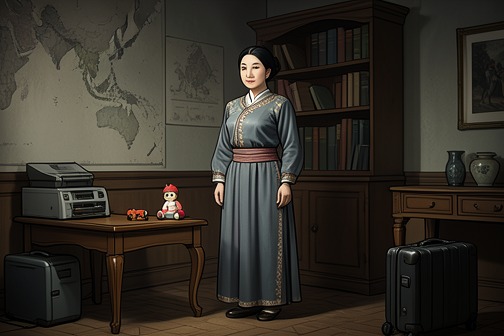
[Devorah](entity:character-recall-character-devorah-702ea5cd08f5)’s mother’s departure from the [Satmar](entity:organization-recall-organization-satmar-0936ed65658d) community left her young daughter behind, turning a constrained choice into a defining absence in Devorah’s childhood. Years later, her mother explained that she had wanted to take Devorah but had no money and feared the hostility her former husband’s family threatened to bring upon her. The account complicates the idea of abandonment: her mother’s wish to leave with her daughter existed alongside the lack of resources and family power needed to do so.
## Departure and Separation
The past surfaced during a birthday meal between mother and daughter. A waiter brought a brownie with a candle, and Devorah reflected on how unusual it felt to celebrate with a mother who had missed most of her birthdays. After they had eaten, her mother described the circumstances of her departure. She had not been able to take Devorah with her, and visits afterward did not restore her authority as the child’s mother. She recalled that [Aunt Chaya](entity:character-recall-character-aunt-chaya-48b90864b0a0) treated her as though she had no rightful place in Devorah’s life.
The separation was therefore not only a departure from a community. It also left Devorah’s daily care and future in the hands of her father’s family, while her mother remained at a distance. Devorah learned that the absence she had grown up with had been shaped by material hardship and threats, as well as by the family arrangements that followed.
## Family Authority and Devorah’s Upbringing
After Devorah’s mother left her father for good, Aunt Chaya took control of decisions about the girl’s life. She determined that Devorah would live with [Bubby](entity:character-recall-character-bubby-f3657468b4ed) and [Zeidy](entity:character-recall-character-zeidy-5af2eaddb772), attend a Satmar school, and eventually marry a religious Satmar man. Aunt Chaya had already established herself as the person who arranged matters and asserted her opinions within the family; she also persuaded Zeidy to approach a matchmaker when Devorah had only just turned seventeen. In practice, Aunt Chaya selected the marriage path Devorah was expected to follow.
Devorah’s account does not reduce everything that followed to one relative’s actions. Although she could have held Aunt Chaya responsible for the consequences of the match, she understood that family members were also carried along by enduring communal traditions. That distinction matters: Aunt Chaya exercised direct authority over Devorah, but the choices she enforced belonged to a larger system of religious expectations and family control.
## An Unexpected Lesson in Agency
Aunt Chaya’s role in Devorah’s life carried an irony. The same woman who had made major decisions for her also showed her, by example, how forcefully a person could take charge. Devorah later recognized that Aunt Chaya had taught her to resist being made unhappy by other people’s choices. This did not erase the harm or make Aunt Chaya the sole cause of Devorah’s struggles; it gave Devorah a complicated model of agency within a family structure that had denied her much of her own.
## The Separation’s Later Echo
When Devorah became a mother, her own son’s future made the earlier separation newly urgent. She feared that [Yitzy](entity:character-recall-character-yitzy-af63ece36641) would be drawn into a narrow religious education and life, while she herself had begun seeking room to learn and imagine alternatives. Readers of her anonymous blog warned that a woman leaving the community might not be allowed to take her child, even if she observed religious laws. Their warnings recalled the powerlessness her mother had described, but Devorah felt certain that she and Yitzy would eventually be free.
Devorah’s later departure with Yitzy reversed the separation that had marked her own childhood. After leaving, she changed her phone number and kept her address private, then began building a closer relationship with her son in their new circumstances. Her mother’s story did not determine what Devorah would do; it made the stakes of leaving a child behind impossible for her to ignore. The two departures thus frame different outcomes of the same pressure: her mother left without Devorah, while Devorah ultimately left with Yitzy.
Event 8
Moshe attacks Deborah in the cellar

[Moshe attacks Deborah in the cellar](entity:event-recall-event-moshe-deborah-c180563797d4) after a shift from joking familiarity to physical menace. The attack’s significance lies not only in [Devorah](entity:character-recall-character-devorah-702ea5cd08f5)’s escape, but in the way the episode breaks through the silence surrounding what Moshe tried to do: when her grandfather later confronts her, she cannot fully explain the assault, yet she asserts a right to leave rather than submit to questioning.
## The Prank Call and a Shift in Tone
Before the cellar encounter, Moshe and Devorah share a joking rapport. They make prank calls together, including a fake Con Edison warning that ends with the suggestion that someone should run after a supposedly runaway refrigerator. On another occasion, Moshe proposes dialing toll-free numbers with funny words; some calls reach actual businesses, including a plumbing service. Their play establishes a sense of mischief and easy companionship, but it also gives Moshe an opportunity to turn a joke into a test of Devorah’s discomfort.
He calls 1-800-FATLADY and puts the phone on speaker. A machine delivers a breathy, suggestive message. Devorah quickly presses the Off button; Moshe laughs at her reaction, and she feels tricked. The change in the room’s atmosphere is immediate in her recollection: what had seemed like shared silliness now has an edge, because her unease has become the joke.
Moshe then asks Devorah’s age. She tells him she is thirteen. He says he had thought she was seventeen and remarks that she looks much older. The exchange gives the preceding prank a more troubling context: Devorah’s age is made explicit, while Moshe’s attention to her appearance follows the sexualized call. The scene does not yet describe the cellar assault, but it marks a progression from joking into an interaction that leaves Devorah feeling deceived and observed.
## The Assault in the Cellar
When Devorah reaches for the bottle Moshe has set on the cement floor, he seizes both her wrists. She is carrying a heavy key ring, but shock leaves her arms nearly motionless. Against the cellar wall, she registers his tight grip and the sudden change in his expression: the familiar pose of amused disinterest has given way to a tense jaw and narrowed eyes. She searches his face for signs that this is only another frightening game, but his body pins her legs against the wall as he lifts her wrists over her head and pulls down the zipper of her housedress.
Devorah screams and tries to hide herself. Moshe covers her mouth and pushes her toward the floor, holding her by the shoulder and waist. The key ring becomes her only available weapon. She drives the keys into his pelvis, then twists a sharp key into the soft part of his abdomen. As Moshe shifts away and reaches for the keys, she thrusts them into his pelvis again; he jumps off her, clutching himself and groaning.
She pulls up her zipper and escapes through the piles of cellar junk, running up the creaky stairs into the bright parlor. In the rush she forgets the wine she had been sent to carry upstairs. The escape is immediate and physical, but it does not end the danger’s hold on her: once upstairs, she has to pass through the dining room, where [Zeidy](entity:character-recall-character-zeidy-5af2eaddb772) notices her and asks for the bottle.
## Disclosure and Aftermath
When Moshe is proposed for a match, Zeidy is pleased that someone is interested in the grandson he had nearly given up on. Asked by a caller seeking information about Moshe’s character, Devorah refuses the customary praise and instead describes him as dangerous and unstable. Her response turns the private assault into a conflict with the community’s expectation that she help present him favorably. Zeidy sits her down to reprimand her, but she strikes both palms on the table and tries to tell him what happened.
Devorah cannot complete the explanation. She begins to say that Moshe tried to do something, then stops and leaves the table while Zeidy calls after her. The account emphasizes not a full disclosure but a change in her position: she no longer has to return or explain herself if she does not want to. After the assault’s bodily struggle, leaving the conversation becomes another form of resistance, and the right to withdraw is something she recognizes as newly hers.
Zeidy asks [Aunt Chaya](entity:character-recall-character-aunt-chaya-48b90864b0a0) to speak with her. Aunt Chaya approaches gently, and Devorah tells her only part of what happened—enough to make her face twist with rage. Aunt Chaya condemns the boys and questions why Zeidy had allowed Moshe to live in the same house as Devorah. Her response gives Devorah a witness, though the account does not describe a formal investigation or any broader communal reckoning.
Moshe eventually becomes engaged to an Israeli girl. The narrator presents such a match as a last resort in the community’s marriage hierarchy; Moshe will move to [Israel](entity:location-recall-location-e1a1566e26c9) and live near his wife’s family. His departure means Devorah will never have to see him again. The ending supplies distance rather than an account of justice: the danger recedes because Moshe leaves, while Devorah’s broken attempt to tell Zeidy remains part of how the assault is remembered.
## Space, Objects, and the Limits of Disclosure
The scene’s spaces sharpen its reversal. In the cellar, cement underfoot, piles of junk, and the wall constrain Devorah’s movement; the key ring in her hand is at first incidental, then the one object she can turn against Moshe. Her escape carries her up creaking wooden stairs into the bright parlor, but brightness does not make the event speakable: there she meets the ordinary household question about the forgotten wine. The passage sets domestic routine beside bodily danger without allowing the transition upstairs to erase what happened below.
Objects also mark the distance between what can be acted out and what can be told. Devorah can use the keys in the moment, yet later, at the table, she cannot finish the sentence about what Moshe tried to do. Her partial account to Aunt Chaya makes the assault legible to another person, while leaving its full description withheld. The episode’s force therefore rests partly in that gap: physical resistance is vivid and concrete, but speech arrives broken and incomplete.
Event 9
Deborah leaves the Satmar community
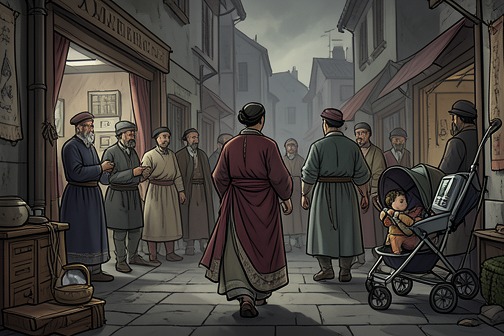
[Devorah](entity:character-recall-character-devorah-702ea5cd08f5)’s departure from the [Satmar Hasidic community](entity:organization-recall-organization-satmar-hasidic-c-f4ec672ab052) is both a break with an inherited way of life and the beginning of a new relationship with her son, [Yitzy](entity:character-recall-character-yitzy-af63ece36641). It follows years of concealed doubt and growing discontent, but its decisive measure is not simply that she leaves: she can finally imagine a future in which her son may learn, read, and grow beyond the restrictions that have shaped her own life.
## Background and the First Divisions
The departure gains meaning against the contrast Devorah draws with her mother. At twenty-four, a year after leaving, Devorah describes herself as newly at the starting line of her life, with a future she imagines as expansive. Her mother had left at an older age and without her daughter; Devorah understands that her mother’s journey had been more about finding security than pursuing happiness. Their choices share a movement away from the past, but Devorah sees her own ambitions as larger and insists that both women made a choice for the better.
The conflict had become personal well before Devorah made her exit. Marriage preparation forced her to confront a body and sexual expectations from which her upbringing had kept her sheltered. She later identified that moment as a division in her life: the demands attached to marriage clashed with the chaste existence in which she had felt at home, and she connects her resistance to the eventual destruction of her marriage. At the mikvah, ritual preparation and inspection intensified her sense that other people had authority over a transition she did not feel ready to inhabit. These experiences do not alone explain her departure, but they reveal how private discomfort and communal expectations had become entangled.
## Motherhood and the Stakes of Leaving
Having Yitzy changes the question from whether Devorah can endure her own limitations to whether she can accept them for her child. As he approaches the age when boys enter cheder, she imagines him wearing payos and a prayer shawl and spending his days studying [Torah](entity:object-recall-object-torah-61a404afb5a0), while she is pushed to the margins of his life. She cannot reconcile that future for him with her own desire to broaden her horizons. The possibility of leaving therefore becomes inseparable from her fear that staying would commit her son to a childhood she experiences as narrow and confining.
The risks are not abstract. Readers of her anonymous blog warn that a woman who leaves may not be allowed to keep her child, and one commenter claims that such an outcome has never been achieved. Others describe women who tried and failed; the comments make the threat of losing Yitzy explicit. Devorah is not reassured by the examples, however. She believes her circumstances are different and holds to the hope that she and her son will both be free, even though she has no concrete plan for how to make that happen.
## From Private Rebellion to Decision
For a time, Devorah’s outward life and inward convictions remain split. She continues to keep kosher, dress modestly, and present herself as a devout Hasidic woman, while privately longing to escape the boundaries placed around what she may see, know, and experience. The split is sustained by necessity: she feels trapped, without a place to go or the resources to change her circumstances. Her rebellion initially has no clear route into action.
Reading and writing begin to make a different life imaginable. In the library, she remembers how much she once risked for books and how freely authors seemed able to express what she could only keep secret. She grows tired of pretending to piety and chastising herself for doubt; she wants to acknowledge her identity openly and to write. When an agent contacts her after her blog reaches publishing circles, the possibility of publication gives that desire a practical opening. Her wish to leave is thus joined to a wish to speak in her own name, rather than remain hidden behind a performed identity.
## Departure and Its Aftermath
After leaving, Devorah changes her phone number and keeps her new address from the people she has left behind because she fears being tracked down. She expects to need time to settle and find security, but one of the first changes she notices is the closeness that develops between her and Yitzy. Outside the familiar social world, mother and son must get to know one another without other people standing between them. Devorah feels that only now can she be his mother in an honest relationship.
She begins their new life with ordinary lessons that carry unusual weight. She teaches Yitzy English; they read books together and watch Sesame Street. Within weeks he is speaking English, and their conversations before sleep become part of their growing intimacy. His affectionate comment on her uncovered hair shows that he is attentive to her difficult transition. Devorah is moved by that awareness and troubled that a child so young is already concerned about their circumstances.
The exit is therefore not presented as an effortless arrival at freedom. It brings insecurity, separation from family and community, and the work of establishing a life with few familiar supports. Yet the change is decisive: Devorah no longer has to preserve an outward religious identity that contradicts her private self, and she can give Yitzy access to language and books that she had long associated with forbidden possibility. Her departure transforms freedom from an inward hope into the daily practice of raising her son beyond the limits she feared for them both.
Event 10
Deborah’s arranged marriage
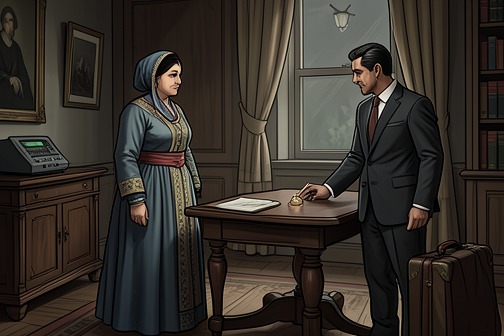
[Deborah Feldman](entity:character-recall-character-deborah-feldman-11fc8d14a68e)’s arranged marriage, undertaken at seventeen after a meeting with her prospective husband lasting only thirty minutes, becomes a decisive collision between communal expectations and personal autonomy. The marriage’s sexual and emotional dysfunction, compounded by public shame when it was not immediately consummated, turned an imposed adult role into a source of debilitating anxiety. Later, motherhood changed the stakes: the future at issue was no longer hers alone.
## Background and Stakes
The memoir places the marriage within Feldman’s upbringing in a strictly religious household, where rules governed her clothing, speech, and reading. Her childhood account also recalls a gradual movement away from accepting authority simply because it was authority: she describes arriving at her own conclusions while still trying to maintain an outwardly composed appearance. This tension supplies the background to the marriage. The expected role of a good [Satmar](entity:organization-recall-organization-satmar-0936ed65658d) girl stood against an emerging desire for a life she could choose for herself.
The marriage was arranged when Feldman was seventeen. The briefness of the couple’s prior acquaintance is central to the account: they had met for just thirty minutes before becoming engaged. The memoir’s synopsis presents the resulting marriage not as a secure passage into adulthood but as a sexually and emotionally dysfunctional situation in which Feldman felt trapped. The contrast between the scant time spent getting to know her prospective husband and the weight of the commitment underscores how little space she had to shape the terms of this transition.
## Marriage, Shame, and Anxiety
The failure to consummate the marriage immediately became a public humiliation as well as a private marital difficulty. Feldman experienced pressure to serve her husband, while the exposure of her inability to meet that expectation intensified her distress. The account connects this shame to debilitating anxiety, showing how communal judgment magnified an already painful and intimate problem.
The marriage therefore altered more than Feldman’s domestic circumstances. It made the conflict between prescribed duty and self-direction bodily and immediate. The memoir’s description supports neither a simple romance nor a story of adjustment: the relationship is characterized as dysfunctional, and the experience as emotionally damaging. Its significance lies in the mismatch between the role imposed on a young bride and her growing recognition that her life could not be governed solely by others’ expectations.
## Motherhood and the Changing Stakes
At nineteen, Feldman had a child. The memoir marks this as a change in the scale of the problem: she understood that more than her own future was at stake and that she would have to seek a path to happiness and freedom for herself and her son. Motherhood did not erase the constraints surrounding her marriage; it made the consequences of remaining within them harder to regard as affecting only one person.
In the larger arc, the marriage is thus both an intimate crisis and a turning point in the question of responsibility. Feldman’s earlier wish for another kind of life acquired a new urgency when her child’s future became part of the decision. The account ultimately frames her movement beyond the past not as forgetting it: she later reflects that she had freed herself while continuing to cherish the experiences that formed her.
## Retrospective Account
The memoir’s presentation invites a distinction between the experience as it unfolded and its later interpretation. Feldman recalls an earlier loss of unquestioning faith in authority, then looks back on the marriage as part of the widening conflict between her own conclusions and the teachings she absorbed. The episode’s significance is therefore made visible across time: what had once been an apparently prescribed step into adulthood came to represent a life she could not accept as her only possible future.
The book also cautions that its identifying characteristics have been changed and that some events were compressed, consolidated, or reordered to protect those involved and preserve narrative continuity. It says the dialogue approximates remembered conversations. That disclosure does not negate the marriage’s place in Feldman’s account, but it situates the episode within a consciously shaped memoir. Its eventual meaning is carried by the contrast between the young bride’s constrained choices and the later narrator’s insistence that freedom remains a source of joy.
Event 11
Birth of Deborah’s son
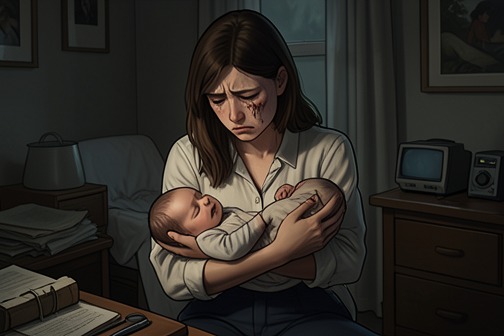
The birth of [Deborah Feldman](entity:character-recall-character-deborah-feldman-11fc8d14a68e)’s son marks a decisive change in her memoir: motherhood makes her future inseparable from her child’s, and turns the search for a life beyond [Satmar](entity:organization-recall-organization-satmar-0936ed65658d)’s restrictions into a responsibility she must take up for both of them.
## Background and Circumstances
At seventeen, Feldman entered a sexually and emotionally dysfunctional marriage with a man she had met for only thirty minutes before their engagement. Their failure to consummate the marriage immediately became a source of public shame, intensifying the pressure on her to fulfill the expectations placed on a wife. The child she had at nineteen arrived within this fraught marital and communal setting, where her private distress was bound up with demands about her role and conduct.
## What Motherhood Changes
Before becoming a mother, Feldman’s desire for another life was principally a struggle over her own freedom. Having a child makes the consequences of that struggle extend beyond herself. She recognizes that her son’s future is also at stake, and that simply enduring her circumstances would leave his life shaped by the same constraints she is trying to escape. Motherhood therefore changes the question from whether she can imagine a different future to whether she can forge one for them both.
## Significance in the Memoir
The event is a turning point in the memoir’s account of Feldman’s developing resolve. Her responsibilities as a mother do not erase her own need for happiness and freedom; they sharpen it, giving her search a second, intimately connected purpose. The birth thus links personal self-determination to the future of her son, and makes the path she must find an act of care as well as an effort to claim her own life.
Event 12
September 11 attacks

The [September 11 attacks](entity:event-recall-event-september-11-attacks-8e527031f862) enter [Devorah](entity:character-recall-character-devorah-702ea5cd08f5)’s life not first as a public spectacle but as a break in the ordinary sounds and routines of a school day. Late to school and initially unaware of what has happened, she notices a strange quiet, is sent home without explanation, and learns the news from [Zeidy](entity:character-recall-character-zeidy-5af2eaddb772)’s newspaper and a small kitchen radio. The attack’s first meaning within her family is shaped by fear: Zeidy anticipates that Jews will be blamed, while [Bubby](entity:character-recall-character-bubby-f3657468b4ed) imagines riots and expulsion, and fears that the Holocaust will happen again.
## The morning’s unnatural quiet
On Tuesday, [September 11, 2001](entity:time-recall-time-september-11-2001-f6eb4c28a3e6), Devorah is late to school. At a quarter past ten, she walks the three blocks to the high school building at a fast pace. As she rounds the corner onto Harrison Avenue, the sky looks ominously gray, but the atmosphere does not feel like the start of rain. The air seems murky, as if filled with construction dust. This unsettled impression is set against a familiar urban backdrop: the school has no air-conditioning, and with fall not yet arrived, its windows are open.
Usually the street noise overwhelms the teacher’s voice. Drilling, honking, and trucks bumping over metal plates make it necessary to close the windows during lessons. That day, however, the street is eerily quiet. Devorah can hear only faintly chirping sparrows. The quiet is not yet an explanation; it is an absence that makes the familiar setting feel wrong before she knows why.
At one o’clock, the school’s rarely used public-address system crackles into life. The secretary announces that all girls are dismissed, instructing them to pack and leave in orderly lines. Buses are waiting for students who live far away, and the school will notify them when classes resume. The announcement gives no reason. Devorah looks around, confused: school is normally canceled only for an emergency such as a fire, yet there are no alarms. Her classmates are glad to be released and giggle as they line up; she is the one who remains curious about the unexplained decision.
## The news reaches the family
Walking home pensively, Devorah worries that Zeidy may think she is making up a story to avoid school. The concern belongs to the ordinary expectations of her day, even as the unexplained dismissal points toward an event too large for her to imagine. At home, Zeidy is not in his office. Upstairs, Bubby is kneading challah dough, her apron smeared with sticky residue, while holding the telephone to her ear. She says little, responding with occasional nods and vague questions.
Zeidy arrives carrying a folded newspaper. He rarely brings secular newspapers into the house. When he wants stock-market news, he sometimes crosses Broadway to read the business section of The Wall Street Journal at a Mexican bodega. The paper’s presence at home therefore stands out. He signals Bubby to put down the phone and spreads it across the flour-dusted table. Its cover shows what appears to Devorah to be a photograph of the [World Trade Center Twin Towers](entity:object-recall-object-world-trade-center-twi-92199e034992) burning. She does not understand why he is showing it to them.
Zeidy explains that a terrorist attack has taken place that morning and that a plane flew into the towers. Devorah asks when it happened. It is already a quarter past two in the afternoon, and the news feels difficult to reconcile with the school day that has just ended. Zeidy says it happened at eight-something and announces that he will buy a radio so the family can listen to the news. His decision signals the seriousness of the event: he does not normally let them listen to the radio.
## Listening and anticipating blame
For the rest of the afternoon, the family huddles beside a tiny radio in the kitchen, hearing the same broadcast repeated. Its account gives the morning a precise time: at 8:46, a plane crashed into the first tower. The repetition supplies a factual sequence to a day Devorah has experienced through unexplained signs—the gray sky, the quiet street, and the sudden dismissal—while the family remains gathered around the limited information available to them.
As they listen, Zeidy fears that the attack will be blamed on Jews. Bubby distinguishes between [Israel](entity:location-recall-location-e1a1566e26c9) and Jews, but Zeidy answers that others will treat them as the same. Their disagreement is not about whether the news is grave; it concerns how its consequences may fall on Jews, including those far from the attack. In the kitchen, a report of violence elsewhere becomes a fear about the family’s own vulnerability.
Bubby believes that another Holocaust may follow. She anticipates riots and the possibility that Americans will want Jews expelled, and says she always knew it would happen again. Her response makes the past an immediate lens through which she interprets the present. She urges Devorah to repent before [Yom Kippur](entity:time-recall-time-yom-kippur-449c2cb62e4f), warning that the world can turn upside down in a moment. The plea connects the family’s fear to the approaching religious day and to the possibility, as Bubby sees it, that events can overturn security without warning.
## A private encounter with public catastrophe
The episode is narrated through Devorah’s limited understanding as a schoolgirl. She initially has no explanation for the quiet or the early dismissal, and she receives the attack through other people’s actions: the secretary’s announcement, Zeidy’s unusual newspaper, and the radio he buys. The distance between the attack and her first knowledge of it is measured in everyday details and hours. At 10:15 she is walking to class; at one she is sent home; by 2:15 she is looking at the newspaper while Zeidy explains what happened.
That sequence gives the event a domestic shape without diminishing its scale. The newspaper is unfolded on a kitchen table marked with flour; Bubby’s challah dough and the tiny radio frame the family’s response. The broadcast repeats the time of the first plane strike, while conversation turns toward blame, Israel, Jewish identity, and the remembered possibility of persecution. The scene does not offer a broader account of the attack or its aftermath. Instead, it records how the news arrives in one household and how quickly public catastrophe becomes, for its listeners, a question of danger to their own community.
Event 13
Satmar wig-burning protest
The [Satmar wig-burning protest](entity:event-recall-event-satmar-wig-burning-prot-5e7b436f4d43) began with a rabbinical prohibition on human-hair wigs and became a conspicuous public spectacle just before [Devorah](entity:character-recall-character-devorah-702ea5cd08f5)’s wedding. The ruling made the wigs that married women wore a matter of religious alarm; the bonfire that followed made the community’s response visible to crowds, police, and journalists. For Devorah, the timing was not abstract: she was preparing to cover her hair after marriage, and the ban threatened the kind of wigs she had expected to receive.
## The ruling and its religious grounds
The controversy began when it was discovered that much of the hair used to make sheitels for married Hasidic women came from India, where women shaved their heads at temples and offered their hair as sacrifices. The rabbis regarded it as unacceptable for members of the community to benefit from something associated with idol worship. Their response also framed the scandal as a judgment on women’s appearance: they blamed the wearing of attractive human-hair wigs and presented women’s vanity as a source of religious danger. The Yiddish newspapers carried angry headlines and photographs of rabbis gesturing forcefully in [Brooklyn](entity:location-recall-location-b0361f31948e) synagogues, giving the ruling a public, urgent tone.
The rabbinical court temporarily prohibited the human-hair trade. Until an acceptable source could be established, only synthetic wigs could be bought or sold. The restriction therefore reached beyond religious interpretation into a practical change in what married women could wear. It also applied at a moment when Devorah was about to enter married life, when covering her hair would become part of her new circumstances.
## The approaching wedding and Devorah’s choices
Devorah resented the timing because she had expected the customary pre-wedding preparation to include luxurious, silky wigs. Under the new restriction, she anticipated that [Zeidy](entity:character-recall-character-zeidy-5af2eaddb772) would buy her inexpensive synthetic ones, which she expected to look artificial and wear out within about six months. Human-hair wigs could cost more than three thousand dollars apiece, far beyond what she expected to be able to afford herself later. The ban thus made the future cost of a personal religious requirement part of her immediate wedding preparations.
When [Chaya](entity:character-recall-character-chaya-eaebec02b46d) took her to a wigmaker to be measured, Devorah sat in the hairdresser’s chair unhappy with the available choices. The wigmaker remarked on the convenience of wigs, especially not having to wait for hair to dry or spend time styling it, while acknowledging that she missed feeling the wind in her hair. Devorah’s own hair had never caused her difficulty, but she was nervous about seeing herself in wigs. She selected three: one longer style for [Shabbos](entity:time-recall-time-shabbos-3f385073634f), to fit beneath the white tichel worn on Friday nights, and two shorter, neater styles like those worn by women in her family. Zeidy did not allow wigs longer than shoulder-length. These choices show that the controversy did not erase her ability to make decisions about cut and color, but it narrowed those choices through the ban and family expectations.
## The bonfire and its public audience
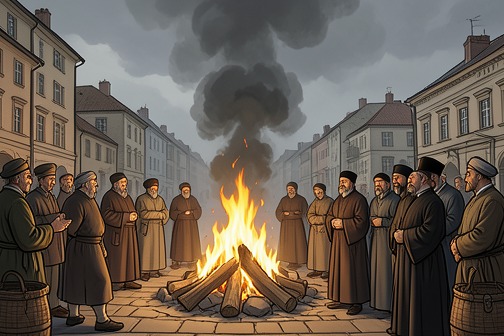
That night, men brought their wives’ wigs to a large bonfire outside the [Satmar](entity:organization-recall-organization-satmar-0936ed65658d) shul, while crowds gathered and cheered. The scene was not contained within the synagogue: police erected barriers to keep people from spilling into the roads and to prevent riots. Shouting continued until dawn, and journalists took numerous photographs, a presence that angered many in the crowd. The public destruction of the wigs turned a ruling about what could be bought or worn into a collective demonstration, with the objects themselves made the focus of the gathering.
The next morning, Zeidy brought home The Wall Street Journal, whose front page featured the bonfire. Its headline compared wig-burning to bra-burning. Devorah did not fully understand the comparison, but recognized its mocking tone. The image had traveled beyond the community, and the event was being interpreted for an outside readership rather than presented solely on the community’s own terms.
## Disagreement over the meaning of protest
Zeidy reacted with disappointment and anger. He questioned the need for a fire and objected that the spectacle had made the community’s actions visible to non-Jews; in his view, the matter could have been handled quietly. He also dismissed the younger participants as people who always needed something to shout about. His response did not dispute the religious concern behind the ban; it challenged the manner in which the protest had been carried out and the attention it attracted.
That contrast gives the event its significance in Devorah’s account. The rabbis’ prohibition was presented as a response to a perceived religious contamination, while the bonfire made obedience public and drew a broader audience into the dispute. Zeidy’s disapproval reveals that public display itself was contested within the community. For Devorah, meanwhile, the protest’s consequences were both immediate and intimate: as she prepared for marriage, a communal crisis had changed the available wigs, raised the prospect of ongoing expense, and placed a new rule directly inside the choices through which she imagined her married appearance.
Event 14
Eli leaves home and returns

[Eli leaves home and returns](entity:event-recall-event-eli-3483279197ed) in a single night, but the departure changes the meaning of [Devorah](entity:character-recall-character-devorah-702ea5cd08f5)’s marriage even after she accepts him back. His absence, communicated by his mother rather than by [Eli](entity:character-recall-character-eli-90681e812a09) himself, turns their private sexual difficulties into a possible divorce and exposes how little control Devorah has over the decisions shaping her life. His apology restores the household’s outward arrangement, not her trust or affection.
## The departure and its immediate cause
By this point, Eli has watched Devorah struggle with recurring panic attacks, though she believes he does not understand what is happening to her. One day in June, he does not come home from work. Devorah tries calling him and waits into the evening; when she contacts his mother, she is told that Eli will not return that night and does not want to speak to her. The account gives no explanation for where he is or why he has chosen to leave.
Devorah calls [Chaya](entity:character-recall-character-chaya-eaebec02b46d), who already knows what is happening. Chaya explains that Eli’s mother thinks he should divorce Devorah because they have been unable to have intercourse. The proposed separation thus arrives not as a conversation between spouses but as a decision relayed through his mother. Devorah is shocked that Eli could choose his mother over her without warning or even telling her directly.
## Fear, anger, and the unequal burden
The news first leaves Devorah numb with fear. She recognizes that divorce could mean losing her home and friends, and she doubts she would ever remarry. Yet anger soon overtakes that fear: she feels blamed for a failure that she does not believe is hers alone to bear. She thinks back to nights when she comforted Eli because he could not maintain an erection, and questions why her inability to have intercourse makes her responsible for the couple’s failure while his difficulties did not carry the same judgment.
Her anger widens beyond Eli. She resents Chaya’s advice, [Zeidy](entity:character-recall-character-zeidy-5af2eaddb772)’s role in marrying her to a family she considers fanatical, Eli’s failure to protect their privacy, and the interference and gossip of his parents. She also recalls that her father-in-law lectures Eli about religious sexual practices and seems to take pleasure in their failure to consummate the marriage. Awake until dawn, Devorah muffles her wails so she will not wake the neighbors. The crisis makes a private marital problem feel like a whole network of family authority closing around her.
## Eli’s return and the outward reconciliation
At seven the next morning, Eli comes home and prostrates himself before Devorah, apologizing. She can see his lips moving but cannot take in what he says; inwardly, she has already cut him out of her life. She agrees to take him back, and he hugs her with relief. The gestures restore the appearance of reconciliation, but Devorah believes that remaining married will mean performing the part of a loving, good wife without again caring for Eli as a person.
This is therefore a return without emotional repair. Devorah’s agreement ends the immediate threat of separation, but the account does not describe a renewed intimacy or a resolution of the couple’s sexual difficulties. Instead, her silent assent leaves the marriage in place while registering an inward break that Eli does not seem to recognize.
## The aftermath and the longer arc
Eli’s mother responds to the crisis by telling him not to let Devorah read library books, treating her reading as though it were responsible for their problems. Devorah feels too tired to resume the childhood deceptions that had enabled her to read, and puts her books into a large plastic garbage bag for Eli to take to the Dumpster outside his office. The episode links the threatened marriage to another loss of privacy and independence inside the home.
The fear of being alone that shapes Devorah’s response here contrasts with her later resolve to imagine a life beyond the community. As [Yitzy](entity:character-recall-character-yitzy-af63ece36641) approaches the age when he will begin cheder, she worries about his prescribed religious education and about being pushed to the margins of his life. When readers of her anonymous blog warn that she may not be allowed to leave with her son, she remains determined that both of them will eventually be free. Much later, after the [September 9, 2009 car crash](entity:event-recall-event-2009-9-9-817d56cc1dfe), she signs a memoir contract and recognizes that she is not returning to her life with Eli. In the intervening years, this night’s reconciliation proves not to be the end of the marriage’s rupture, but an early instance of the difference between outward compliance and inward separation.
Event 15
The couple consummates their marriage for the first time
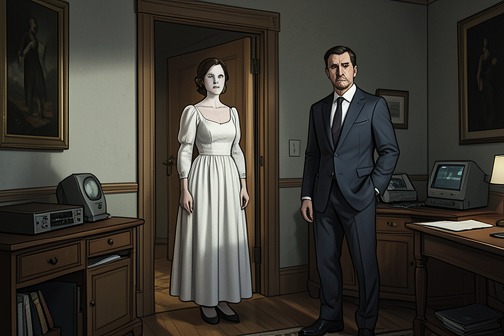
[The couple consummates their marriage for the first time](entity:event-recall-event-3112bb22987b) after a prolonged struggle that [Devorah](entity:character-recall-character-devorah-702ea5cd08f5) understands through medical treatment as vaginismus. The event is a hard-won change in the marriage, but not a simple resolution: her body’s response has been shaped by years of sexual silence, and the effort to change it unfolds under religious and marital expectations that leave her carrying much of the burden.
## Background and Obstacles
Before the wedding, [Devorah’s discovery of her mekor](entity:action-recall-action-devorah-s-discovery-of-71dda79acbc6) marked a sharp break with the sheltered understanding of her body she had grown up with. She later reflects that the change conflicted with a life in which sexuality had been kept out of view, and that her body seemed to resist the new demands placed on it. That resistance would become one source of strain in the marriage.
The couple’s difficulty also sits within a system of rules governing intimacy. Devorah’s marriage lessons present menstruation and ritual purity as conditions affecting when spouses may be together, while the prospect of being considered impure on the wedding day is treated as a public embarrassment as well as a private obstacle. Later, [Eli](entity:character-recall-character-eli-90681e812a09) tells her that religious rules against men masturbating make her responsible for satisfying his needs. These expectations frame intimacy as an obligation even as Devorah struggles to feel at ease in her own body.
## Treatment and Attempts to Change
After promising Eli that she would seek a way to address their problem, Devorah sees a therapist recommended by [Dr. Patrick](entity:character-recall-character-dr-patrick-3c2abcc0748f). The therapist identifies vaginismus and explains that the body can respond to the mind’s resistance; a book she gives Devorah describes how past conditioning can persist as muscular memory. Devorah learns that treatment involves gradual practice with dilators, breathing, and exercises intended to help the muscles relax.
The process is private and demanding. Rather than use the dilators in the therapist’s office, where she would feel exposed, Devorah orders a kit online and practices at home while Eli is at evening prayers. It takes three months to work up to the largest dilator, and the final stage remains painful. The physical practice has advanced, but she recognizes that her mental and emotional response has not changed along with it.
For their first anniversary, Devorah and Eli go to a hypnotist show in [Las Vegas](entity:location-recall-location-2ca5b4ac110f) without telling their community the true destination; Eli gives his mother a different explanation. The show prompts Devorah to consider hypnosis as another possible approach. Back in New York, she pays a licensed hypnotherapist in [Manhattan](entity:location-recall-location-5e470c74b89c) $250 for a session. She does not know whether she has been hypnotized, but afterward tells Eli they can try again.
## The First Consummation
Before the attempt, Devorah goes to the mikvah. The attendant has seen her before and offers reassurance about the delay, a comment that makes clear how visible the couple’s difficulty has become within the ritual setting. At home, Devorah tries to make the occasion less tense for Eli, who has also grown uncertain after their repeated failures.
This time they succeed. Devorah experiences discomfort, but the attempt is brief, and Eli responds with intense relief and happiness. His reaction contrasts with her more complicated experience: the immediate barrier has been crossed, yet the event does not mean that the years of bodily concealment or her emotional resistance have disappeared.
## Significance and Limits of the Resolution
The first consummation changes the status of the marriage without resolving the conflict beneath it. The couple’s progress has depended on Devorah’s promise, her research, repeated private exercises, a paid therapeutic session, and her effort to manage Eli’s anxiety. The sequence makes visible how much work she undertakes to meet an expectation that is presented as marital and religious duty.
The memoir places this success beside Devorah’s earlier sense that her body had been shaped by a life of sexual ignorance, and beside her recognition that physical technique alone could not settle the emotional problem. The event is therefore both a breakthrough and a qualified one: a new possibility for the marriage, not proof that intimacy has become comfortable or that its underlying pressures have lifted.
Event 16
The narrator discovers she is pregnant

[Devorah](entity:character-recall-character-devorah-702ea5cd08f5)’s discovery that she is pregnant turns a tentative new phase of her marriage to [Eli](entity:character-recall-character-eli-90681e812a09) into an immediate, life-altering reality. The positive test arrives soon after their first successful intimacy; the news brings Eli joy and gives Devorah a concrete focus for asserting control, even as she registers little emotion about becoming a mother.
## The Signs and the Test
After their first time together, Eli is eager to repeat the experience. A few days later, he returns from the synagogue with a possible explanation for Devorah’s unusual perception of smells: a friend has told him that pregnancy can make women smell things that are not present. Devorah doubts that pregnancy could happen so quickly, but recognizes that conception can follow a single instance of intercourse.
After [Shabbos](entity:time-recall-time-shabbos-3f385073634f), they buy a test. Two pink lines appear within five minutes, confirming the pregnancy. Devorah immediately feels that the baby will be a boy, though the test itself establishes only that she is pregnant. The sequence makes the discovery abrupt: an observation Eli initially offers as a possibility becomes an unmistakable result.
## Practical Resolve and Uneven Emotion
Devorah responds by going to a bookstore the next day for pregnancy books, then spending the week reading on the couch. She resolves not to drink at all, despite her sister-in-law’s view that a little would be acceptable, and commits herself to having a healthy pregnancy and baby. She describes this as something that is finally within her control.
That focus on preparation stands against her lack of felt excitement. She does not experience the emotion Eli does, and instead occupies herself with supplies, where to shop, and the prospect that her clothes will soon no longer fit. Eli, by contrast, is nearly weeping with happiness and unsure whether to share the news immediately or wait the customary three months. Their different responses do not prevent Devorah from taking the pregnancy seriously; they show her turning toward decisions she can make while the emotional meaning remains distant.
## Eli’s Family and the Meaning of the News
Eli cannot keep the news to himself and calls his mother. When he tells Devorah that his mother cried with happiness, he explains that she had thought this day might never come. Devorah understands the reaction against her mother-in-law’s earlier fear that the couple would not resolve their difficulty until Devorah was forty. Her dry dismissal of the older women’s alarm contrasts with the weight the pregnancy carries for Eli’s family.
Eli also explains that pregnancy means Devorah will be considered ritually clean for the next nine months and will not need to go to the mikvah during that time; he anticipates being able to touch her. The pregnancy therefore changes not only their expectations of family life but also the couple’s immediate experience of the rules governing physical contact.
## Narrative Significance
The scene presents pregnancy as both a bodily fact and a new field of agency. Devorah cannot command how she feels, but she can read, make choices about drinking, and plan for the baby’s health. Her insistence on those practical measures gives the news a different meaning from Eli’s unguarded celebration: for him it is a long-awaited joy, while for her it first becomes a responsibility she can actively manage.
The memoir’s prefatory account cautions that names have been changed, events may have been compressed or reordered, and dialogue approximates remembered conversations. The discovery is thus presented as a carefully reconstructed personal recollection, with the contrast between the couple’s reactions and Devorah’s turn toward practical control carrying its significance.
Event 17
Move to Airmont
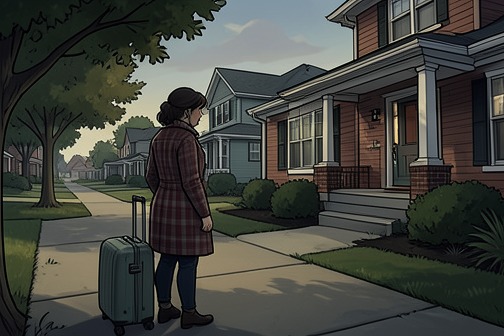
The move from [Williamsburg](entity:location-recall-location-a204f8f8ef73) to [Airmont](entity:location-recall-location-009f0ccdfb76) is a practical response to an approaching birth and a decisive attempt by [Devorah](entity:character-recall-character-devorah-702ea5cd08f5) to gain space and independence. The new home promises distance from cramped quarters, neighborhood scrutiny, and the sense that even married life in Williamsburg remains under communal observation; its rural setting gives her a different kind of freedom, though not an escape from every constraint.
## Causes and Decision
Devorah decides she cannot raise a child in the couple’s Williamsburg apartment: it is too small for a crib or toys. Her wish for a backyard and trees is shaped by her own childhood in a private brownstone with a garden, a contrast she remembers against the housing projects where most of her friends lived. The coming baby makes the apartment’s limitations immediate, but the decision is also rooted in her exhaustion with a neighborhood where gossip and watching eyes make privacy feel impossible. Even a discreet outing with [Eli](entity:character-recall-character-eli-90681e812a09), such as going bowling, risks attracting notice.
She sees that marriage has not delivered the freedom she had hoped for. In Williamsburg, she feels that a grown woman remains subject to the same scrutiny she experienced as a child. Eli, too, is uncomfortable with [Brooklyn](entity:location-recall-location-b0361f31948e)’s cramped conditions, having grown up where people were more spread out. Devorah turns these shared frustrations into a plan, repeatedly reminding him that his two-hour commute will take time away from the baby. She also points out that his brothers and sisters live upstate and that nothing obliges them to stay where they are. The move begins as her sustained effort to make change seem less like a risk and more like a practical choice for their family.
## Finding a Home and Leaving
Eli consults his brother [Aaron](entity:character-recall-character-aaron-3ee24d7d53a3), who enthusiastically lists reasons to move and knows of an available apartment he can help them obtain at an excellent price. When Devorah and Eli visit it, she is not pleased with its condition. She accepts the compromise because she expects to find a better place later and is already glad at the prospect of leaving Williamsburg. The apartment’s shortcomings matter less, for the moment, than the change of setting it makes possible.
By the time Devorah tells [Aunt Chaya](entity:character-recall-character-aunt-chaya-48b90864b0a0), the boxes are already halfway packed, though she still feels she should formally notify her. Aunt Chaya responds with apparent approval, suggesting that moving to [Monsey](entity:location-recall-location-26db13cc53da) could be a good idea. Devorah hears some uncertainty in the response but also an openness she had not assumed. She expects that in Airmont, a small town just outside Monsey, she will be far from everyone’s attention and able, for the first time, to live independently.
## The New Setting and Its Consequences
The couple’s new apartment is on the ground floor of a ranch-style house on a small dead-end street just off the [New York State Thruway](entity:location-recall-location-1f417b8a03fd). The setting eases Devorah’s city-bound restlessness in an unexpected way: the nighttime traffic and constant chirping of crickets soothe her. She loves the country and cannot imagine returning to the city’s prying eyes and confining rooms. The move thus changes more than the family’s address; it gives her a daily experience of space that contrasts with the close surveillance she associates with Williamsburg.
The rural setting also changes the practical demands of daily life. Devorah walks along Route 59 to shop, but as her pregnancy advances she worries about whether she will be able to keep walking everywhere. Knowing that some women in Monsey drive, she decides to take driving lessons and persuades Eli that she could help on long road trips. She keeps her pregnancy from her instructor, Steve, because he makes derogatory remarks about Hasidic women as baby machines. To conceal her queasiness, she wakes early to get the vomiting over with before he arrives. The move brings greater physical and social distance from Williamsburg, but this episode shows how she still manages what others know about her, and how pregnancy remains a fact she must negotiate in ordinary encounters.
Event 18
Community revelations of an elderly man’s suspected long-term child molestation
[Community revelations of an elderly man’s suspected long-term child molestation](entity:event-recall-event-27e8c3971d58) begin with a boy’s disclosure and unfold through rumor rather than a public investigation. As the narrator hears that the boy has been excluded from yeshiva while the accused man remains at large, the episode turns her attention to a gap between communal solidarity and justice: concern for reputation and harmony appears to outweigh protection and accountability.
## Discovery and institutional response
The account reaches the narrator through [Eli](entity:character-recall-character-eli-90681e812a09) during a period when late pregnancy has left her in pain and largely confined to the couch. Gossip brought home by Eli has become one of the few things that interrupts her days. One evening, she asks what people are discussing after prayers, and he tells her that the son of a man named Bronfeld has been expelled from yeshiva for being molested. The news initially arrives as one more piece of neighborhood talk, but its implications quickly displace the ordinary appetite for gossip.
Eli explains that the boy had been acting strangely at school. When the principal questioned him, the boy said that an elderly man who had been giving him bar mitzvah lessons had molested him for months. The man was already familiar to the narrator as an older figure from a nearby synagogue, known by his limp. The allegation therefore concerns not an unknown outsider but someone with a place in the community and a role of trust in a child’s religious preparation.
The school’s response compounds the boy’s exposure. According to Eli, the principal told the boy’s father that the school could not keep him because he might corrupt other children; afterward, no yeshiva was said to want him. The reported consequence falls on the child who disclosed the abuse, while the adult accused of causing it is not described as facing immediate formal consequences. The father, Eli says, does not want the matter publicized, fearing that attention will make the boy’s situation worse. He expects someone in the community to handle it, but the account does not establish that the allegation is reported to outside authorities.
## Search, disappearance, and return
Several days later, the elderly man disappears. Rumor holds that his family pressured him to hide. During his absence, some people from the community enter his home and search through his belongings. Eli tells the narrator that they find shoeboxes filled with photographs of children. The pictures lead those who see them to suspect that the man had abused children over a much longer period, perhaps throughout his life, and that the possible number of victims could be in the hundreds. These are reports relayed to the narrator, not the findings of a described public inquiry; the scale of the suspected abuse remains unverified in the narrative.
A few weeks later, when his family believes public attention has subsided, the man returns home. The narrator sees him taking his daily walk, moving slowly, his body bent with age. She feels revulsion and anger, and when she drives past him she slows near the curb and looks directly at him. She imagines a more openly hostile response but does not act on it. He appears not to notice her, and his self-satisfied smile remains lodged in her memory. The ordinary recurrence of his walk, after the reported discovery and disappearance, makes the lack of a visible reckoning especially stark.
## Compassion, justice, and religious law
Eli explains the absence of punishment by saying that the man is too old to go to jail. The narrator rejects the implication: age has not prevented the alleged abuse, so it should not settle the question of accountability. Her anger broadens into a critique of the community’s professed compassion for fellow Jews. In her view, a love that is extended indiscriminately, even to people accused of terrible crimes, can become a reason not to distinguish between care for a person and tolerance of what that person has done.
The community’s stated priority, as she understands it, is to live harmoniously and leave justice to God. That principle has force in the episode because the boy’s father fears publicity, the school removes the boy, and the accused man returns after the rumors quiet down. The narrative does not establish that every community member agrees with this approach; it shows instead how talk of compassion and communal peace can coexist with an apparent absence of protection for the child or a clear process for addressing the allegation.
The case also unsettles the narrator’s expectation that religious law provides a rule for every offense. She wonders whether halacha or a rabbinical procedure addresses child abuse. In her reading, the [Torah](entity:object-recall-object-torah-61a404afb5a0) discusses other prohibited sexual acts but does not seem to provide an answer to this situation. Eli responds by pointing to historical differences in the age of marriage and to the older absence of a clear social boundary between childhood and adulthood. His explanation does not resolve her question about what the community should do now; instead, it leaves a tension between inherited legal categories and the present harm described to her.
## Secrecy, stigma, and the narrator’s vantage
The narrator encounters the disclosure inside a social world where reputation and belonging are consequential. As a girl who did not live with her parents, she feared being marked as an object of pity, and she remembers how children’s scorn for outsiders could make exclusion feel like a collective ritual. Years later, when children in [Williamsburg](entity:location-recall-location-a204f8f8ef73) mistake her for a gentile because of how she is dressed, she recognizes that she has become an outsider in the place where she grew up. These experiences do not verify the abuse or explain the community’s decisions, but they give context to her alertness to who is singled out, whose story circulates, and who bears the cost of public attention.
The same tension between visibility and concealment appears in her dealings with people outside the community: she has hidden her Hasidic origins from outsiders who criticize Hasids, while her appearance can also lead others to misread or unexpectedly recognize her. Against that background, the handling of the boy’s disclosure is not simply a question of whether the story becomes public. Publicity may increase the boy’s social burden, as his father fears; silence, meanwhile, leaves the alleged abuse and the absence of accountability unresolved. The episode ends without a reported investigation or verdict. Its significance lies in that unresolved aftermath: the narrator is left confronting the distance between a language of compassion and the demands of protecting a child and responding to an accusation.
Event 19
Rumors of a boy’s death and a community cover-up
The rumors of a boy’s death and a community cover-up enter [Devorah](entity:character-recall-character-devorah-702ea5cd08f5)’s story not as a confirmed investigation but as a disturbing account passed from one person to another. While she is pregnant and confined to bed, [Eli](entity:character-recall-character-eli-90681e812a09) tells her that a [Hatzolah](entity:organization-recall-organization-hatzolah-9f65c3ae4613) responder described finding a boy dead in his home and being instructed to remain silent. The reported order to conceal what happened, rather than the account’s unresolved details alone, makes the episode a test of what communal loyalty demands—and what it may cost.
## Circumstances and Participants
The account reaches Devorah during the weeks she spends on bed rest after a hospital scare. Eli has been coming home early on Fridays to prepare for [Shabbos](entity:time-recall-time-shabbos-3f385073634f), doing the tidying and warming the challah because she is no longer strong enough to manage the household as before. On one rainy Friday, she is reading a pregnancy guide in bed when she hears him speaking anxiously on the phone in the kitchen. After the call, she goes to ask who had been speaking with him. The ordinary domestic setting gives way to a report of death and secrecy, arriving while Devorah’s attention is already fixed on the child she is carrying.
Eli says the caller was a Hatzolah responder who had gone to the home after receiving a call. According to this account, the boy’s father directed him to the basement, where he found the boy dead. Eli relays that the father did not appear upset and attributed the situation to the boy’s conduct. These details are not presented through an independent witness or official record: Devorah hears them from Eli, who heard them from the responder. The chain of retelling is central to the event. It offers enough to provoke alarm, but not enough to establish exactly what happened or who, if anyone, was responsible.
## The Reported Concealment
Eli also relays that neighbors had heard a loud argument in the home. The responder reportedly said that when he contacted dispatch, he was told to go home and keep quiet, and that others would handle the matter. He further reported that the boy was buried within thirty minutes and that no death certificate was issued. The narrative presents these assertions as part of the responder’s account, not as independently verified findings; the alleged concealment is therefore a rumor within the story, rather than a resolved case.
That uncertainty does not make the allegation inconsequential. Devorah immediately considers the possibility of a killing and questions why a suspected crime might be hidden to protect the community’s reputation. Eli cautions her that the responder himself does not know for sure what happened. He invokes the requirement for two witnesses in a murder trial and warns that the person who spoke to him could get into serious trouble. The exchange leaves two pressures in direct opposition: the demand to take a grave report seriously, and the fear that repeating it could bring consequences for the person who disclosed it.
## Devorah’s Response and the Secret
Devorah is angry at the prospect that people might enforce minor rules while remaining silent about a possible death. Her reaction is not a discovery of proven guilt; it is a response to the possibility that reputation and obedience could take precedence over investigation. Eli asks her not to tell anyone, both because the account is uncertain and because the caller may be endangered by its circulation. Devorah restrains herself at the Shabbos table. When no one else offers anything to discuss, she wonders whether another person is also holding back a troubling story. The silence around the table becomes a social echo of the instruction Eli has relayed.
She keeps the secret for a long time, but it continues to affect her. In recurring nightmares, the dead boy is replaced by her own son, and she wakes frightened and checks for the baby’s movements. The dreams do not resolve the boy’s fate or prove the allegations; they show how the account has lodged in Devorah’s imagination, joining fear for the child she has not yet met to her fear of a world in which serious harm might go unspoken. She addresses the baby silently in her thoughts and resolves that she will not remain quiet forever. The event thus changes from hearsay into a private obligation: Devorah cannot establish what happened, but she can recognize the danger of allowing silence to stand in for an answer.
## Narrative Significance and Limits
The episode belongs to the memoir’s account of Devorah’s growing independence of judgment. Looking back, she identifies her loss of innocence as a gradual break with accepting authority for its own sake; this scene makes that break concrete. Eli offers reasons for caution grounded in uncertainty and risk, while Devorah sees the moral danger in treating silence as the safest response. The disagreement does not establish that her suspicions are correct. Instead, it marks the widening distance between deference to communal handling of a crisis and her emerging insistence that a troubling report cannot simply be forgotten.
The memoir also cautions readers about the status of its material: it says that the incidents are true but that some events have been compressed, consolidated, or reordered, and that dialogue approximates remembered conversations. Names and identifying characteristics have been changed. That framing reinforces the need to distinguish the event’s reported claims from established facts. The boy’s death, the account of what the father said, and the alleged instruction to conceal the matter remain mediated through recollection and hearsay. What the narrative firmly records is the effect of hearing the story: Devorah’s fear, her enforced silence at the family table, and her promise to the unborn child that she will eventually speak.
Event 20
Birth of Yitzy
[Yitzy’s birth](entity:action-recall-action-yitzy-ecb38706467c) turns a pregnancy already tied to [Devorah](entity:character-recall-character-devorah-702ea5cd08f5)’s hopes for a different future into a medical emergency and a bodily awakening. The delivery is not an uncomplicated arrival into motherhood: it leaves her startled by the intensity of labor, uncertain of her connection to the baby, and newly resolved to fight for change.
## Background and Medical Decision
At a routine appointment, [Dr. Patrick](entity:character-recall-character-dr-patrick-3c2abcc0748f) taps Devorah’s knee with a small metal hammer and sees her reflex jump. After measuring her blood pressure at 135 over 85, she decides it is time to deliver the baby. Devorah has been thinking about what might come after the birth: because women’s work in the Hasidic community is poorly paid, she has promised herself to pursue a degree that could lead to nursing or teaching and give her child a better life. Before she can begin researching how to persuade [Eli](entity:character-recall-character-eli-90681e812a09) to let her study, the decision is taken out of her hands by the need to go to hospital.
At [St. Luke’s–Roosevelt Hospital](entity:location-recall-location-551b26700bcb), a doctor explains that the admission is for preeclampsia, which poses a danger to the baby. She describes it to Devorah as the body reacting to the baby as though it were a threat, and says labor will be induced because the pregnancy has progressed far enough. Medication will be given through the cervix while Devorah sleeps; Pitocin will follow in the morning, with an epidural available once contractions become painful. The explanation gives the delivery a clear medical cause and timetable, but Devorah remains a nineteen-year-old patient in a room where another woman assumes she is older and praises her for starting a family early. Devorah reads the remark as judgment rather than encouragement.
## Labor and Delivery
Twenty-four hours later, Dr. Patrick wakes Devorah with the announcement that it is time. Eli cannot touch her under the rules governing contact with his wife during ritual impurity, so a male nurse holds one of her legs. The contrast unsettles Devorah: she wonders how the arrangement protects purity when a man she does not know is looking at her most private area, while her husband must remain apart. The scene makes the rules of bodily separation immediate, not abstract; even during labor, the regulation defines who may support her and how.
Then comes the physical force of the birth. Devorah feels an immense pull in her abdomen, as though her insides are being drawn out; the baby’s sudden passage leaves her stomach collapsing and knocks the breath from her. When Dr. Patrick asks whether she wants to see the baby or wait until he has been cleaned, Devorah chooses to wait. The glimpse of the wet, squirming newborn is more than she can bear at that moment. Eli is already beside the crib, looking between the doctors, while Devorah tries to hold on to the overwhelming sensation before it fades.
## Meeting the Baby
The placenta is brought out and set on a table. Dr. Patrick asks Eli whether he wants it, explaining that some Jewish families bury it; Devorah shakes her head no when he looks to her. The [Talmud](entity:object-recall-object-talmud-289a2ef8c3b7) calls the placenta the tree of life, both for the branching pattern on its surface and for its part in sustaining a child. To Devorah it looks repellent on the tray, and the couple does not take it home. Her response sets the immediate, physical aftermath of birth against the religious meaning attached to it: she is aware of the tradition, but does not want to carry this object with her.
The baby arrives wrapped in clean blue blankets, with tiny blond curls darkened by moisture and golden skin. Eli tears up; Devorah is calm. For the first hour she talks to the child about anything and everything, while his dark eyes remain fixed on her face. Yet conversation does not immediately produce recognition. She cannot quite connect the tiny person in her arms with the baby who had moved inside her, and feels as if he has been arbitrarily placed in her care. Months earlier she had giggled when limbs bumped against the walls of her uterus; now she wonders why she does not feel maternal love. She talks partly in the hope that words will persuade herself, the baby, and everyone around her that she is in love.
## Aftermath and Narrative Significance
The delivery’s importance lies partly in the gap between what Devorah thinks motherhood should feel like and what she actually experiences. Her first response is not instant emotional certainty but bewilderment and distance. That uncertainty does not erase the physical bond of pregnancy; rather, she tries to make sense of how the body that held the baby can now seem separate from the stranger in her arms. The scene preserves that unsettled beginning instead of smoothing it into a conventional portrait of immediate maternal attachment.
The birth also becomes a decisive memory in Devorah’s account of her five-year marriage. She later wonders whether the moment when the baby left her body was the only time in those years she felt fully alive. As its force recedes, she recognizes it as a wake-up call that makes her begin fighting again. The immediate aftermath offers no simple emotional resolution: when a nurse notices that Devorah is not contracting properly, she massages her abdomen to start the process, kneading the loose flesh. Birth is therefore both an arrival and a demand placed on Devorah’s body, while its remembered intensity becomes part of her explanation for the changes that follow.
The account is presented as memoir, with an explicit note that names and identifying details have been changed and that some events have been compressed, consolidated, or reordered to protect people and preserve narrative continuity. The birth is thus recounted not only as a medical episode but as an experience whose significance Devorah understands more fully in retrospect: a physical shock, a difficult first encounter with her child, and a point from which renewed resistance becomes possible.
Event 21
Discovering that her mother left Williamsburg because she was gay
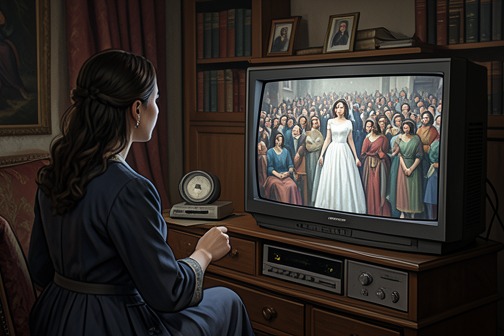
[Devorah](entity:character-recall-character-devorah-702ea5cd08f5)’s discovery that her mother left [Williamsburg](entity:location-recall-location-a204f8f8ef73) because she was gay turns a library documentary into an unexpected encounter with the family history from which she has been excluded. Seeing [Rachel Levy](entity:character-recall-character-rachel-levy-e17d101b2c32) speak briefly on screen, Devorah learns not only why her mother left but how completely that truth had escaped her; her response is a cautious act of kindness, followed by an unsettling sense of emotional distance.
## Religious Doubt and the Search for Context
The discovery comes amid a widening crisis of belief. Devorah has moved from believing in God, to believing while hating Him, to wondering whether life is random. The lives of people outside the Hasidic world trouble the punitive logic she has absorbed: they appear to live without being punished for not being Hasidic. Her doubt is not simply an abstract argument about theology. It grows from comparing the rules governing her own life with the existence of people who live differently.
A documentary from the library gives that comparison a personal face. It follows gay Orthodox Jews struggling to reconcile their faith with their sexuality. Devorah watches them describe wanting to remain both Jewish and gay, and initially wonders why they would seek belonging in a religious community she sees as intolerant and oppressive. Then, as the credits roll, she recognizes her mother’s name among the contributing voices: Rachel Levy. The film has placed a hidden family connection inside a public account of identity and religious conflict.
## The Revelation on Screen
Devorah rewinds the documentary. Rachel appears only briefly, stepping off a curb, but her statement is direct: “I left Williamsburg because I was gay.” In a few seconds, the film changes Devorah’s understanding of her mother’s departure. The woman she has known mainly through absence is revealed as someone who left for a reason Devorah had not imagined, in response to a conflict between sexuality and religious belonging that echoes the documentary’s larger subject.
The discovery also makes Devorah reconsider what other people may have known. She recalls that [Chaya](entity:character-recall-character-chaya-eaebec02b46d) had called her mother crazy, and now wonders whether everyone understood the truth except her. Her shock is sharpened by the realization that she had never even considered this explanation. The event therefore reveals more than Rachel’s sexuality: it exposes the limits of Devorah’s knowledge of her own family and the isolation created by what has not been said to her.
## A Tentative Gesture of Contact
Devorah does not feel ready to speak with her mother. Before [Shavuos](entity:time-recall-time-shavuos-4199902f6808), however, she looks up Rachel’s address and sends a large bouquet with a special card. The gesture is deliberately modest: Devorah is not prepared for a conversation, but wants to do something kind, in part imagining what she would want a daughter to do for her. The holiday gives her a reason to reach across the distance without pretending that the distance has already disappeared.
A few days later, Rachel calls. Devorah does not answer, so her mother leaves a message thanking her for the flowers. The voice sounds to Devorah like a surprised child’s, yet carries the harder inflections of an adult who has had to become thick-skinned. Listening to the scratchy recording, Devorah marvels that this woman is her mother and that she gave birth to her, while also feeling nothing. That numbness troubles her: she wonders whether she is unable to feel connected even to someone bound to her by blood. The call establishes contact, but does not produce instant intimacy or resolve their estrangement.
## Significance in the Story of Leaving
The revelation acquires further weight as Devorah confronts the future awaiting her son. She fears that when [Yitzy](entity:character-recall-character-yitzy-af63ece36641) turns three he will receive payos and begin cheder, spending his days learning [Torah](entity:object-recall-object-torah-61a404afb5a0) and entering a world of male influences from which she expects to be pushed into the background. She cannot reconcile wanting a broader life for herself with consigning him to what she sees as a narrow and limiting one. At this stage, she has neither a clear route out nor the resources to change their circumstances; her resistance remains partly secret, beneath outward observance and modest dress.
The public conversations surrounding her anonymous blog later make the practical danger of leaving with Yitzy more explicit. Readers warn that a religious community or rabbinical court may not let a mother take her child if she is no longer considered devout. Their warnings do not persuade Devorah that she must stay, but they show why independence cannot be separated from motherhood, custody, and access to education. Against that pressure, her wish to acknowledge her true self and to give her son room to read and learn becomes a concrete part of her imagined escape.
The memoir does not present Rachel’s disclosure as a simple blueprint for Devorah’s own choices. Instead, the film makes a previously unthinkable life legible: a woman can leave Williamsburg because her sexuality conflicts with the life available there. Devorah’s later reflections on freedom, and her eventual departure, give the scene a longer resonance without erasing its immediate uncertainty. The daughter reaches toward her mother with flowers, receives a voice on an answering machine, and remains unsure what she feels. The contact is small, but it brings a concealed family history into view at a moment when Devorah is beginning to imagine that her own life, too, might be otherwise.
Event 22
Enrolling in Sarah Lawrence College’s adult education program
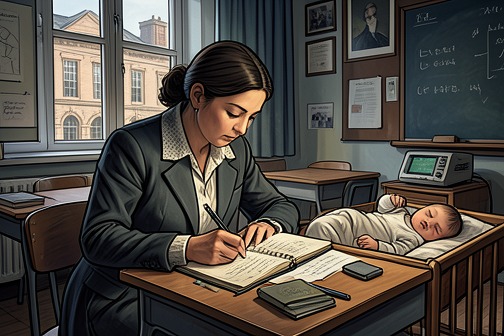
[Enrolling in Sarah Lawrence College’s adult education program](entity:event-recall-event-sarah-lawrence-4a4e49685402) marks [Devorah](entity:character-recall-character-devorah-702ea5cd08f5)’s deliberate move toward education and a wider future while she is still balancing motherhood and life in a Hasidic community. She researches programs, applies without telling [Eli](entity:character-recall-character-eli-90681e812a09) the full purpose of her plans, and wins admission through an assessment centered on writing. At the college, she chooses poetry, entering a field in which she has long wanted to participate but has had little opportunity to learn.
## A Future Planned Around Motherhood
In the fall, after losing enough of her pregnancy weight and once [Yitzy](entity:character-recall-character-yitzy-af63ece36641) is sleeping through the night, Devorah begins researching colleges. Her stated aim is practical and expansive at once: she is determined that she and her son should have a better life. Hannah, a modern Orthodox neighbor who had returned to school at Ramapo College in New Jersey, suggests that adult programs may better accommodate a parent than a traditional undergraduate schedule. Her advice gives Devorah a possible route into higher education that takes her responsibilities as a mother into account.
Devorah investigates nearby colleges and identifies Pace, Sarah Lawrence, Bard, and Vassar as institutions offering adult education programs. Rather than beginning with a broad application campaign, she follows the Sarah Lawrence website’s instruction to call for an interview. The college representative tells her that the fall application period has passed and schedules her to come in on the first Monday in March. The delay makes the prospect concrete: this is not an immediate escape from her present circumstances, but a step she can prepare for and pursue.
## A Quiet Application
Devorah prepares her essays by handwriting drafts before typing them. The first two are autobiographical, and she recognizes that her own experience is material she can draw on. Her application therefore asks her not only to meet an academic requirement but also to present a life shaped by circumstances quite different from those of a typical college applicant.
She does not tell Eli that she is applying to college. Instead, she describes the possibility as a business class and suggests that she probably will not be admitted. Her account of this concealment connects the application to the limits within which she is planning: she is testing a route toward greater independence without openly announcing the scale of her ambitions. Eli does not object to the idea of a class. His questions concern how much time it will take and whether she will still be home to pick up Yitzy from day care and prepare dinner. The exchange shows that the proposed education is being fitted around existing domestic expectations, even as Devorah imagines a life beyond them.
## Admission Through Writing
At the interview, Jane explains that Sarah Lawrence is a writing school, with no exams or grades; students are evaluated through essays and written work. She frames admission as dependent on whether applicants have the writing ability to manage the program, and warns that accepting someone unable to meet that central demand would be unfair to her. Devorah responds that she understands, submits three carefully prepared essays, and asks when she will hear the decision.
Two and a half weeks later, an envelope on ivory stationery bearing the Sarah Lawrence logo arrives. It announces that Devorah has been accepted into the Continuing Education program. She keeps the letter in her hands all day, imagining herself as a student at Sarah Lawrence and picturing herself in jeans and a J. Crew jacket. The acceptance is both an institutional decision and a vivid private possibility: the letter makes a future she had been considering feel real, while the clothes she imagines wearing suggest how closely education is associated in her mind with a less restricted way of living.
Devorah eventually tells her mother about the admission because she thinks her mother will want to know. She understands the news as a small way of showing that she wants something more than her current life. Her mother congratulates her with evident pride, while also raising, indirectly, a question about whether choosing Sarah Lawrence has anything to do with sexuality. The conversation reveals both a continuing distance between mother and daughter and a point of connection: the acceptance is news Devorah wants to share, even though their lives and assumptions remain different.
## Choosing Poetry
Devorah gives Eli a practical account of her plans, describing business classes that might help her find a job or eventually open a business. His immediate concern is whether the study will interfere with her responsibilities at home. In April, however, she attends an open house for the adult students’ summer semester and has already settled on poetry after looking at the syllabus. She wants to read, understand, and discuss poems and famous poets, subjects she has long wished to explore but has not had anyone around her who could teach her.
The poetry professor, [James](entity:character-recall-character-james-b40e84036a54), tells her that many students arrive without prior knowledge of poetry. Devorah’s first class begins with William Wordsworth’s *Anecdote for Fathers*. Hearing James read the poem changes how she attends to it: its language, rhymes, and compact stanzas become more legible to her, and a story that at first seems straightforward opens into questions about the boy’s choice and the father’s response. James emphasizes that details in a poem are deliberate rather than casually included. The lesson offers Devorah a method of reading: notice what draws attention, then ask why it matters. Her enrollment thus begins not only with institutional access but with a new practice of interpretation.
## Significance in the Memoir
The college application follows Devorah’s first months of caring for Yitzy, when feeding him proved difficult and she felt unlike the more experienced mothers around her. The evidence does not present enrollment as a completed break from her community or as an uncomplicated transformation. She remains attentive to Eli’s expectations about childcare and household work, and initially conceals the application’s full purpose. What changes is that she takes concrete steps toward a future she can envision for herself and her son.
The memoir’s account also places the college decision within a longer process of questioning and self-direction. Elsewhere, the narrator describes realizing only later that she had begun to draw her own conclusions rather than accept authority for its own sake. She subsequently identifies [September 9, 2009](entity:time-recall-time-september-9-2009-712799989a15), as a day that divided her life in two, and looks back on her journey toward freedom as both improbable and inseparable from the past that formed her. Those later reflections do not make college admission the single cause of her eventual independence; they give the application a place in a developing arc in which private aspiration becomes action. The memoir also states that its names have been changed and that some events were compressed, consolidated, or reordered, a qualification relevant to reading its narrated chronology as a shaped life story rather than an unedited record.
Event 23
Founding the anonymous blog “Hasidic Feminist”

[Devorah](entity:character-recall-character-devorah-702ea5cd08f5)’s founding of the anonymous blog “Hasidic Feminist” turns private writing into a guarded public forum: a place to examine her life, speak about a subject she had never disclosed, and encounter readers living beyond the limits of her immediate community. The blog does not itself resolve her circumstances, but it gives her a new way to articulate them—and exposes the stakes of imagining a future for herself and [Yitzy](entity:character-recall-character-yitzy-af63ece36641).
## Secrecy and the need to write
By this point, Devorah’s outward observance and inward convictions have diverged. She keeps kosher, dresses modestly, and presents herself as a devout Hasidic woman, while privately yearning to escape the restrictions that keep her from seeing and experiencing more. She regards her true self as the most important secret she must hide from [Eli](entity:character-recall-character-eli-90681e812a09).
Before marriage, she had written her thoughts in journals. After marrying Eli, she stopped: she feared that he might find and read them, and that the pages would let him see what she kept hidden. The change is practical as well as inward. Her thoughts continue to accumulate, but a notebook left in the home could become incriminating evidence of the changes taking place in her. An online journal offers another possibility: expression without an identifiable name attached to it.
The blog draws on material from Devorah’s studies at [Sarah Lawrence College](entity:organization-recall-organization-sarah-lawrence-c-588f3edf3fe2). Its entries are shaped by feminist readings in philosophy and by writing from her theater and writing classes. The project therefore brings together ideas she is encountering beyond her community and the experience she has been unable to discuss openly. Anonymity is essential to that combination: it gives her room to write while protecting her identity from readers who could hold her accountable in her daily life.
## A first post about marriage
Devorah chooses her prolonged inability to consummate her marriage as the blog’s first subject. She had never admitted the problem to anyone and would not ordinarily have considered publicizing it. Her decision follows a phone call from an unidentified woman in [Williamsburg](entity:location-recall-location-a204f8f8ef73), who had received Devorah’s number from [Aunt Chaya](entity:character-recall-character-aunt-chaya-48b90864b0a0). The caller explained that her recently married daughter had been unable to consummate her marriage for eight months and asked whether Devorah had advice.
The request unsettles Devorah’s belief that she is an exceptional case: she had understood her difficulties as an anomaly in her community and in the wider world. Now another mother is searching for an explanation and help for her daughter, without an apparent concrete reason for the problem. Devorah offers what advice she can, although she has not yet fully understood her own experience. The call does not supply her with an answer; it makes silence harder to maintain. Someone else’s need for guidance gives her a reason to put her own story into words.
Writing about what she thinks of as her serious defect feels unexpectedly freeing. The post makes a previously concealed experience available to strangers, but anonymity preserves distance between the disclosure and Devorah’s publicly recognizable identity. That tension—saying something plainly while remaining unseen—defines the blog’s initial function.
## Readers gather around the screen
Comments arrive in a volume Devorah does not expect from what she had thought of as a tiny corner of cyberspace. The readers include rebellious Hasidim, former Hasidim, modern Orthodox Jews, and gentiles. Their responses differ: some doubt that a girl could pass through adolescence without noticing her vagina, some express empathy, and others describe similar experiences. The comments become an argument among readers as well as responses to Devorah, making the blog a forum rather than a one-way confession.
Following those exchanges thrills her. She feels herself at the center of something significant while remaining safe behind the computer screen, unseen and beyond direct accountability. The response changes the scale of her private knowledge: an experience she had treated as uniquely hers becomes something other people can recognize, contest, or discuss. The screen both connects her to readers and maintains the protective separation on which the blog depends.
## The question of Yitzy
The discussion soon turns from Devorah’s marriage to whether she could leave her community with her son. Readers warn that a community would not allow a nonreligious woman to leave with her child. One commenter identifies himself as a lawyer and says that, to his knowledge, it has never been done. Other readers invoke rabbinical courts and examples of women who tried to leave, arguing that even keeping the laws would not make Devorah sufficiently devout to be considered a fit parent.
Devorah is not reassured by these warnings, but neither does she have a concrete plan or know when she can leave. She believes that her situation differs from those of the women cited in the comments and holds to the conviction that she and Yitzy will eventually be free. In her imagined future, he can attend a real school and read books without fear of discovery. The comments make the practical and parental stakes of departure explicit; her response reveals that the possibility of raising Yitzy outside the community has already become part of her private horizon.
## Place in the larger account
The blog marks a change in how Devorah handles the conflict between her outward life and her emerging identity. Earlier, the risk of discovery stopped her from writing privately. Now she writes again by changing the conditions of visibility: the thoughts can be read, but the author cannot readily be identified. The result is neither full public exposure nor the isolation of a hidden notebook, but a limited space in which she can test what it means to tell her story.
The memoir also places this act of writing within a longer process of questioning authority and reaching her own conclusions. Devorah later interprets her life as a journey she managed to complete without severing herself from the experiences that formed her. In that retrospective arc, the blog is a step toward expression and imagined freedom, not proof that departure is already secured. Its readers make clear how formidable the obstacles may be, while Devorah’s insistence that she and Yitzy will leave shows that their warnings do not determine the future she can envision.
Event 24
September 9, 2009 car crash

The [September 9, 2009 car crash](entity:event-recall-event-2009-9-9-817d56cc1dfe) is the near-fatal turning point [Devorah](entity:character-recall-character-devorah-702ea5cd08f5) later understands as a dividing line between her former life and the freedom she is preparing to claim. Occurring as she is moving toward leaving her past behind, the accident briefly draws her back into a world where events may carry spiritual messages; her survival then becomes, instead, a source of resolve. The crash does not itself complete her departure, but it changes how she understands the choice ahead and leads directly into the memoir that will preserve the life she is leaving.
## Background and approach to the crash
On September 8, Devorah stays late at [Sarah Lawrence College](entity:organization-recall-organization-sarah-lawrence-c-588f3edf3fe2) with friends. She feels energized by the prospect of abandoning her life and knows that the first step is close, though she is unsure whether she is waiting for [Eli](entity:character-recall-character-eli-90681e812a09) to push her toward it or for some other sign. That uncertainty carries an important contrast: she can still imagine events as messages, but she is also beginning to see her former self—the girl for whom everything in [Williamsburg](entity:location-recall-location-a204f8f8ef73) was a spiritual message—as someone she has outgrown. The crash will force those two ways of understanding her life into the same night.
The drive back to [Airmont](entity:location-recall-location-009f0ccdfb76) takes about an hour. Devorah leaves before she becomes too tired, puts on a mix CD made by a friend from school, and follows the dark, empty highways. As she comes off the [Tappan Zee Bridge](entity:location-recall-location-8eec4c8e81d8) and veers onto the [New York State Thruway](entity:location-recall-location-1f417b8a03fd), a loud pop precedes the car’s sudden loss of control. The account establishes the sequence but does not establish a definitive mechanical cause. Later, in the hospital, Devorah connects Eli’s earlier warnings that the tires were too thin—and his refusal to replace them because he said he could not afford it—to her anger about what happened. She does not claim that the tires caused the crash.
## The accident and survival
The car spins, hits a barrier, and flips. Devorah believes she is going to die. In that moment, she interprets the accident as deserved punishment from God for standing on the cusp of freedom. Then everything goes black. When she wakes, she is upside down inside the crushed car, unable to open its doors. She finds her purse and phone among scattered belongings, but shock prevents her from making a call. Worried that remaining in the car could be dangerous, she gathers her wallet, phone, and keys and crawls out through the broken passenger-side window. No one has stopped at first; eventually, someone sees her beside the barrier and pulls over.
The encounter with the police compounds her confusion. They repeatedly ask whether she is drunk. She laughs hysterically, though she says she has never been able to stand alcohol, and their interpretation leads them to treat her roughly. Her attention is elsewhere: she cannot understand why she is alive if the crash was supposed to mean her death. As the wrecked car is towed away, she experiences its removal as a separation from her own battered body. She looks at herself and is astonished by her survival; the crash that seemed certain to kill her has left her alive and able to leave the scene.
## The date and its meaning
At the hospital, Devorah remains confused about what the accident means. Because it happens only days before she expects to leave her past behind, she wonders whether it is meant to frighten her into obedience. She also marvels at her body’s capacity to survive. The immediate experience does not settle whether the crash is a warning, punishment, or miracle; instead, it exposes how strongly her older religious framework still shapes the questions she asks.
The timing gives the event a particular significance. The accident happens at midnight, when the date changes to 09/09/09. Devorah recalls that a Kabbalist had identified nine as the number of death and rebirth, endings and beginnings, and as a sign to watch for. She does not present the date as proof of a supernatural cause. Rather, it becomes a pattern through which she can interpret the event: the crash divides her life in two, but survival makes that division feel like an opening as well as an ending.
## Aftermath and narrative significance
Eli visits her in the hospital. Devorah is furious that he had warned her about the tires but refused to have them changed, and she points out that [Yitzy](entity:character-recall-character-yitzy-af63ece36641) could have been in the car. Eli shows no remorse and accepts no responsibility. She tells him to leave and says she will ask a friend to stay with her. The exchange makes clear that the crash is not only a confrontation with mortality; it sharpens an existing conflict in her marriage. Her anger is tied to the danger she faced and to the possibility that Yitzy might have faced it too.
Devorah considers whether the accident is the sign she had been seeking: a clean break from the past. She comes to regard her survival as the miracle she once imagined would arrive, and describes herself as no longer nervous or uncertain. The last twenty-three years, she feels, belong to someone she no longer knows. The next day she signs a contract to write a memoir about that former self, casting the book as her final remembrance of a life she has left behind. Before she leaves Airmont for good, she and Eli attend a religious marriage counselor, but Devorah already knows she will not return. The counseling comes too late to reverse her decision.
The memoir’s framing also asks readers to distinguish the remembered event from the way it is later given meaning. Devorah states that the incidents are true while explaining that some events have been compressed, consolidated, or reordered and that dialogue is reconstructed as closely as memory permits. Years later, she reflects that she has freed herself from her past without letting go of it: she cherishes the experiences that formed her and understands the improbable journey as one she has lived. The crash therefore marks a change in her self-understanding, not an erasure of what came before. Its lasting significance lies in the way survival turns a moment she first reads as divine punishment into a threshold from which she can begin to author her departure.
Event 25
The narrator leaves Eli and Hasidic life with Yitzy
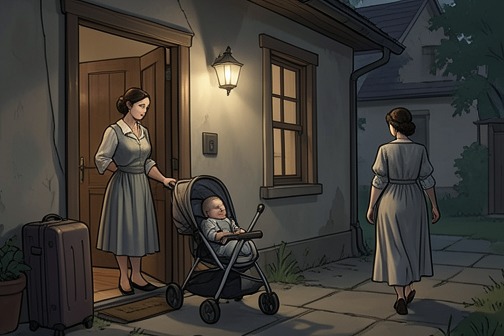
[Devorah](entity:character-recall-character-devorah-702ea5cd08f5)’s departure from [Eli](entity:character-recall-character-eli-90681e812a09) and Hasidic life with [Yitzy](entity:character-recall-character-yitzy-af63ece36641) is not a sudden rejection of one household but the decisive act at the end of a long, constrained struggle over belief, motherhood, and self-determination. Her fear that Yitzy will be raised within the limits she is trying to escape makes leaving a choice about his future as well as her own. The departure breaks open a new life, but it begins in uncertainty and carries the losses of a marriage, a family network, and the world she has known.
## Causes and Background
Devorah’s marriage has been shaped by a system in which family reputation and religious standing weigh heavily in choosing a match. Before her own engagement, she recognizes the competing expectations around marriage: [Zeidy](entity:character-recall-character-zeidy-5af2eaddb772) wants a pious match with a strong [Satmar](entity:organization-recall-organization-satmar-0936ed65658d) family background, while Devorah hopes for a husband who will allow her to read, write stories, and travel to [Union Square](entity:location-recall-location-60b71fc665c8). At the time, she can still imagine marriage as a route to a larger life. That hope later confronts the circumstances of her actual marriage, which she tells a counselor began with Eli leaving her because she could not have intercourse and with his failure to defend her when his family put her down.
The urgency of leaving grows as Devorah considers what will happen to Yitzy. When he turns three, she expects him to receive payos and begin cheder, spending his days learning [Torah](entity:object-recall-object-torah-61a404afb5a0). She fears that the side curls and prayer shawl, and the male influences of school, will mark the beginning of a life in which she is pushed to the margins. The prospect makes the decision more than a personal break from restrictions: Devorah cannot bear the thought of sending her son into an education and childhood she sees as confining while she seeks wider horizons for herself.
Her private resistance has also become an effort to speak openly. In her anonymous blog, readers question whether she could leave with her child and warn that a community or rabbinical court may prevent it. One commenter identifies as a lawyer and claims it has never been done. Devorah does not dismiss the danger, but the warnings do not persuade her to stay. She is exhausted by pretending to be pious and ashamed of her doubts; she wants to acknowledge herself and present her true face to the world.
## The Decision and Departure
Before leaving [Airmont](entity:location-recall-location-009f0ccdfb76) for good, Devorah and Eli attend a religious marriage counselor. Eli believes counseling shows he wants to repair the marriage, but Devorah already knows she will not return. She recounts their first year and the injuries that remain unresolved. The counselor, who is a rabbi rather than a therapist, tells Eli that their problems are serious and recommends that they see a professional. Afterward, Eli proposes divorce. Devorah says they could divorce if that is what he wants; the exchange marks the marriage’s collapse, not a reconciliation or a settled legal outcome.
Devorah then rents a tiny white Kia and packs it with as much as it can hold. Yitzy rides in his booster seat among the boxes and garbage bags, sucking his thumb before falling asleep on the highway. Traffic on the [Tappan Zee Bridge](entity:location-recall-location-8eec4c8e81d8) brings back the sensations of the car crash only days earlier, so the physical journey away is accompanied by an involuntary return to danger. The loaded car is both practical and symbolic: Devorah is carrying what she can, not moving with the security of a prepared new life.
She sells her diamond ring and wedding gifts to a jeweler in Westchester for cash. When he says the pieces will probably be melted down, she feels relief that they will disappear rather than pass to someone else. Other losses are harder to dispose of so cleanly: the dishes and linens she chose, friendships she worked to build, and the extended family network she once belonged to. With few possessions to anchor her, she experiences freedom alongside panic and rootlessness. Leaving removes familiar ties, but does not instantly replace them with security.
## Life After Leaving
Devorah changes her phone number and withholds her new address because she fears being tracked down. She needs time to settle and find security. In the new space, however, she notices an immediate change in her relationship with Yitzy: without other people between them, mother and son must get to know each other directly. She feels that only now is she allowed to be his mother in an honest relationship. The departure therefore alters not only where they live but how they can relate.
Her first practical step is to teach Yitzy English. They read books and watch Sesame Street; he learns quickly, and Devorah is grateful that he is still young enough to adapt. Within weeks, he speaks English with a childlike charm. They sleep together in the queen bed she buys after leaving and talk before falling asleep. When Yitzy tells her, “Your hair is pretty,” she recognizes his attempt to comfort her and is shaken by how perceptive he is about their difficult circumstances. His care makes their new closeness tender, but also reveals how much he has already noticed.
Yitzy has not yet asked about his father. Once, after sliding down a playground slide, he looks at Devorah and asks, “Daddy and you aren’t fighting anymore, right?” The question leaves open what he understands about the separation; it does not resolve the place Eli will have in his life. The departure is thus a beginning rather than a completed adjustment, with mother and son building a relationship in a world where they know no one else.
## Significance
The event turns Devorah’s private wish for freedom into action, with motherhood acting as its immediate catalyst. Her son’s approaching entry into cheder forces her to weigh the future she might endure against the one she fears for him. Yet leaving is not presented as effortless liberation: Devorah faces warnings about custody, the end of her marriage, the severing of family connections, and the practical uncertainty of starting over.
The contrast between the car packed with bags and the new intimacy of the shared bed defines the change. Devorah leaves with little, unsure what can replace the life she has relinquished, but she gains room to teach Yitzy, read with him, and encounter him without the community standing between them. The event’s consequence is therefore both rupture and relationship: a break from the world that shaped them, and the first chance for mother and son to know one another on more honest terms.
Event 26
Solo trip to New Orleans and affirmation of freedom

[Devorah](entity:character-recall-character-devorah-702ea5cd08f5)’s solo trip to [New Orleans](entity:location-recall-location-b21e3947bb35) turns an imagined freedom into a lived one. A year after leaving her former life, she travels alone to a city with no Hasidic residents and few kosher restaurants, without the religious dress and self-imposed limits that had shaped her earlier journeys. On the trip’s final morning, café au lait on a balcony gives her the certainty she had been waiting for: she can go where she chooses, encounter the world on her own terms, and remain connected to her past without being ruled by it.
## Background and Stakes
The trip follows a long process of questioning and preparation. Devorah worries that [Yitzy](entity:character-recall-character-yitzy-af63ece36641)’s approaching third birthday will bring payos, cheder, and a childhood increasingly shaped by male teachers and religious expectations. She cannot reconcile seeking a wider life for herself with leaving her son to what she sees as a stifling one. At the same time, she has no clear resources or plan for changing their circumstances.
The risks are made explicit when readers of her anonymous blog warn that a woman who leaves the community may not be allowed to take her child. One commenter claims that such an outcome has never been achieved; others warn that even observance of religious laws might not persuade a rabbinical court that she is fit to parent Yitzy. Devorah does not dismiss the danger, but she believes she and her son will eventually be free. Her desire to speak openly also grows: in the library, she imagines joining authors whose truths can be put into words rather than kept secret.
By the time she leaves, that inner conflict has become a rupture in daily life. She changes her phone number and withholds her new address to avoid being tracked. In the new space, she and Yitzy begin to form a closer relationship without others intervening; she teaches him English, reads with him, and watches him adapt. The New Orleans journey comes after this break, as an act of movement made possible by the life she has begun to build.
## Entering an Unfamiliar City
Devorah tells a cabdriver that she wants to see the real city, not merely the attractions shown to tourists. She wants to meet people who have lived there all their lives and hear their stories. The wish distinguishes her trip from a conventional visit: travel is not simply leisure but an experience she once could only imagine, and she is determined to pay attention rather than pass through as a tourist.
The departure itself carries weight. It is her first time traveling alone, her first visit to a city without Hasidic residents, and a journey made without the religious costume and restrictions that had previously governed what she could do. When the driver assumes she plans to party, she explains that she does not drink or party. Her purpose is to see the place, not to follow the expected itinerary of visitors heading to Bourbon Street.
The city is strange to her, but not wholly foreign. Over breakfast on a wrought-iron balcony, she recognizes that the coffee served in New Orleans resembles the chicory-mixed coffee of her childhood in school and summer camp. The discovery gives her an unexpected point of connection with a place far from home. From the balcony she looks onto Chartres Street after the celebrating crowds have left, a quiet morning scene that accompanies her growing sense that she can belong to an experience without needing it to resemble the life she left.
## Encounters and Recognition
New Orleans also unsettles the idea that Devorah’s former community is unique. She compares the invisible barriers between races in the city with the social divisions she knew in [Brooklyn](entity:location-recall-location-b0361f31948e), where people seemed to know their assigned places and those places did not mix. The city’s close-knit intimacy, meanwhile, recalls [Williamsburg](entity:location-recall-location-a204f8f8ef73). These likenesses lead her to consider whether the world she grew up in is not exceptional so much as a version of a past preserved in place.
During the trip, a man wearing a cross offers to buy her a drink. They find common ground in not drinking, and he shows her the house he restored himself after Katrina as well as his shotgun collection. When he brings her back to her hotel at four in the morning, she accepts a kiss. The encounter is part of her newly chosen experience of the world: she can meet someone outside her former social boundaries and decide for herself what she is comfortable accepting.
## The Morning of Freedom
On the last day of the trip, Devorah sits with café au lait and realizes that she no longer has to treat travel as an impossible fantasy. She imagines future journeys in which no one can hold her back or dictate where she may go. The significance of the moment lies not in a single destination but in the prospect of a life made up of choices still to come.
A year after leaving, she can also name what the transition has cost and what it has changed. At first, she had felt conspicuous in ordinary clothes and wished to become invisible; that paranoia has faded, though not entirely. She still wants both anonymity and distinction, and does not feel wholly at home in either her old world or her new one. Rather than resolving those contradictions by erasing her past, she describes a present in which past and future meet.
## Jewish Identity and the Trip’s Significance
The journey’s affirmation of freedom does not amount to a rejection of Jewish identity. Devorah had once thought she could remove that identity from herself, but comes to understand it as belonging to history, not simply to ritual or action. She takes pride in the endurance she associates with her ancestors and describes God not as a prescription for paradise but as an ally within her. Leaving religious restrictions and reclaiming the power to make personal decisions therefore coexist with a renewed sense of Jewish belonging.
The café au lait on the balcony becomes the occasion for the certainty she had been awaiting. The image of freedom arriving with breakfast gives an ordinary morning the force of recognition: she has made the break, survived the difficult adjustment, and can now go somewhere simply because she chooses to. Her conclusion is not that every sacrifice has been justified or that all uncertainty has disappeared. Rather, the trip confirms that her life is open to further experience—and that the freedom to direct it belongs to her.